

Hybrid work is widely accepted, but the operating model behind it remains unsettled. Many organisations still manage collaboration environments that evolved in silos, resulting in uneven meeting experiences across locations and governance models that never fully adapted to hybrid ways of working. Even where a single platform has been standardised, fragmentation persists as rooms, devices, integrations, and workflows evolve independently.
Ecosystm research highlights some of the most common hybrid work challenges facing Australian organisations:
- Policy & compliance management – 55%
- Ensuring remote employees have consistent tools & access – 46%
Addressing these issues requires a shift from deploying tools to designing operations. The focus moves to experience consistency, platform cohesion, and governance that keeps collaboration environments aligned as they scale.
Join us for an invitation-only executive roundtable examining how organisations can close the gap between hybrid policy and hybrid operations. In a closed discussion with peers, we will explore how collaboration environments can remain consistent, manageable, and adaptable over time.
Key discussion points:
- Closing the Experience Gap. Where hybrid environments still produce inconsistent or inequitable collaboration experiences.
- From Platforms to Cohesion. Why fragmentation persists and how rooms, devices, and workflows can operate as one system.
- Preventing Environment Drift. How organisations keep collaboration environments aligned while adopting new technologies.
- Making Hybrid Operational. Aligning technology, processes, and behaviour into a workable hybrid model.
- Sustaining Governance. Ownership and lifecycle management needed to keep collaboration environments coherent and scalable.

NEC
NEC Corporation is a Japanese multinational information technology and electronics company headquartered in Tokyo. It provides a wide range of products and services, including IT and network solutions, AI, biometrics, cloud services, and telecommunications equipment, to customers in various industries, including government, finance, and logistics. The company has a global presence and has focused on creating “Solutions for Society,” aiming to provide social value in safety, security, efficiency, and equality.

CISCO
Cisco is an American multinational technology corporation that designs, manufactures, and sells networking hardware, software, telecommunications equipment, and other high-tech services. Founded in 1984, the company became a key player in the development of the internet by pioneering the use of multiprotocol routers to connect different computer networks. Today, Cisco offers a wide range of solutions encompassing cybersecurity, collaboration tools like Webex, and AI-powered infrastructure to help businesses connect, secure, and automate their operations.

Louise Francis
Principal for Industry Research, Ecosystm
Register for this Event
This event has already concluded.
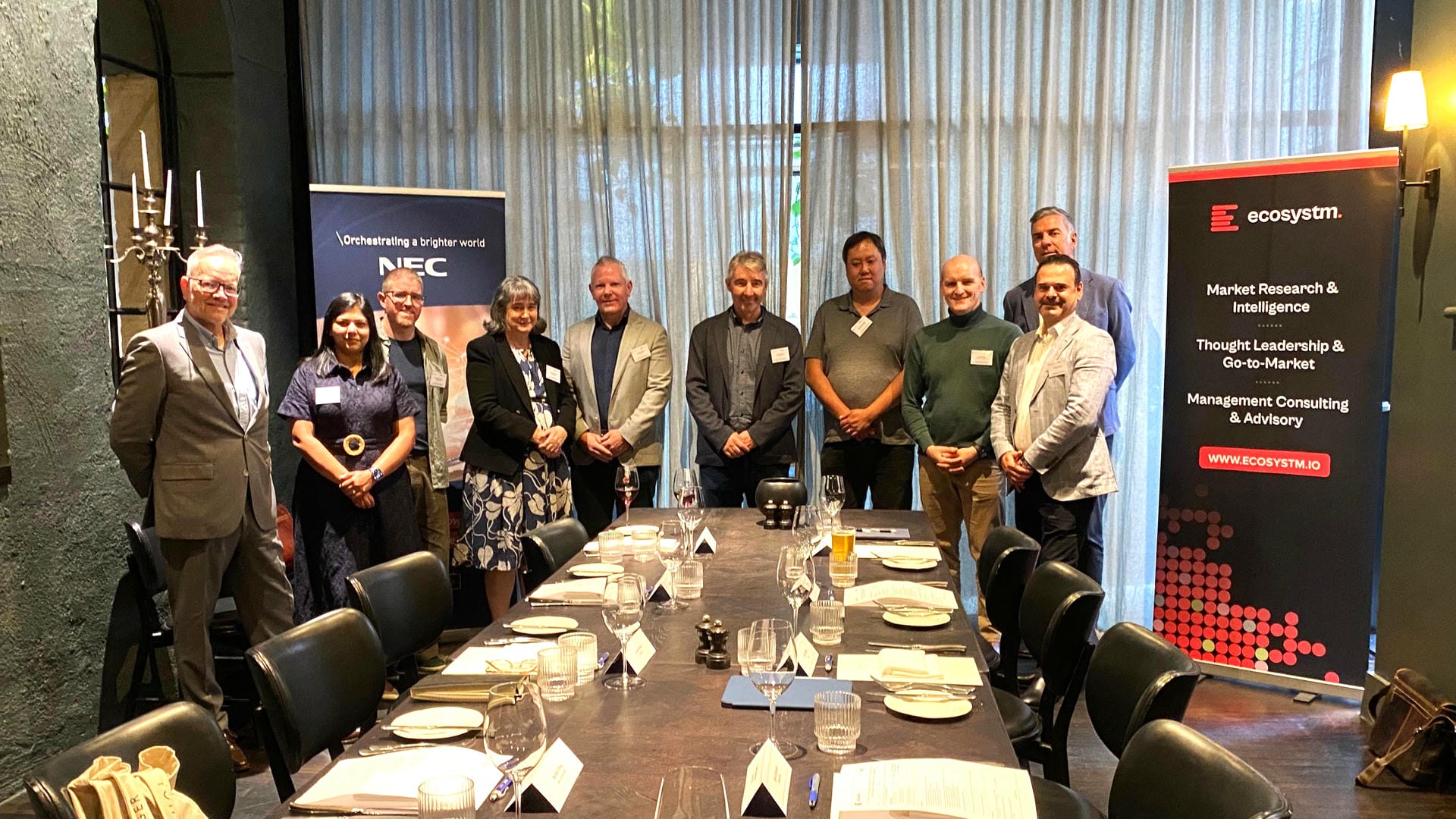
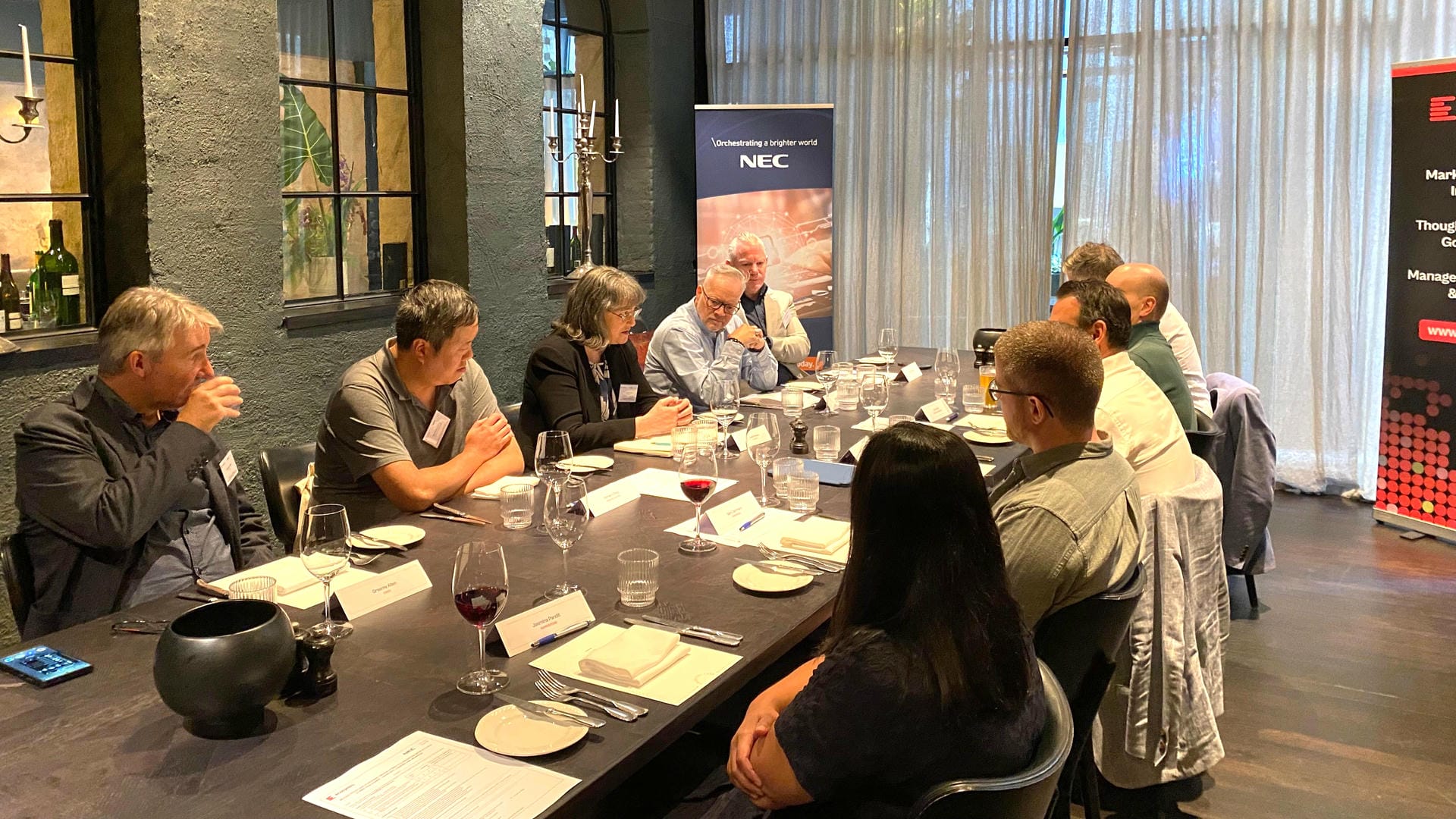
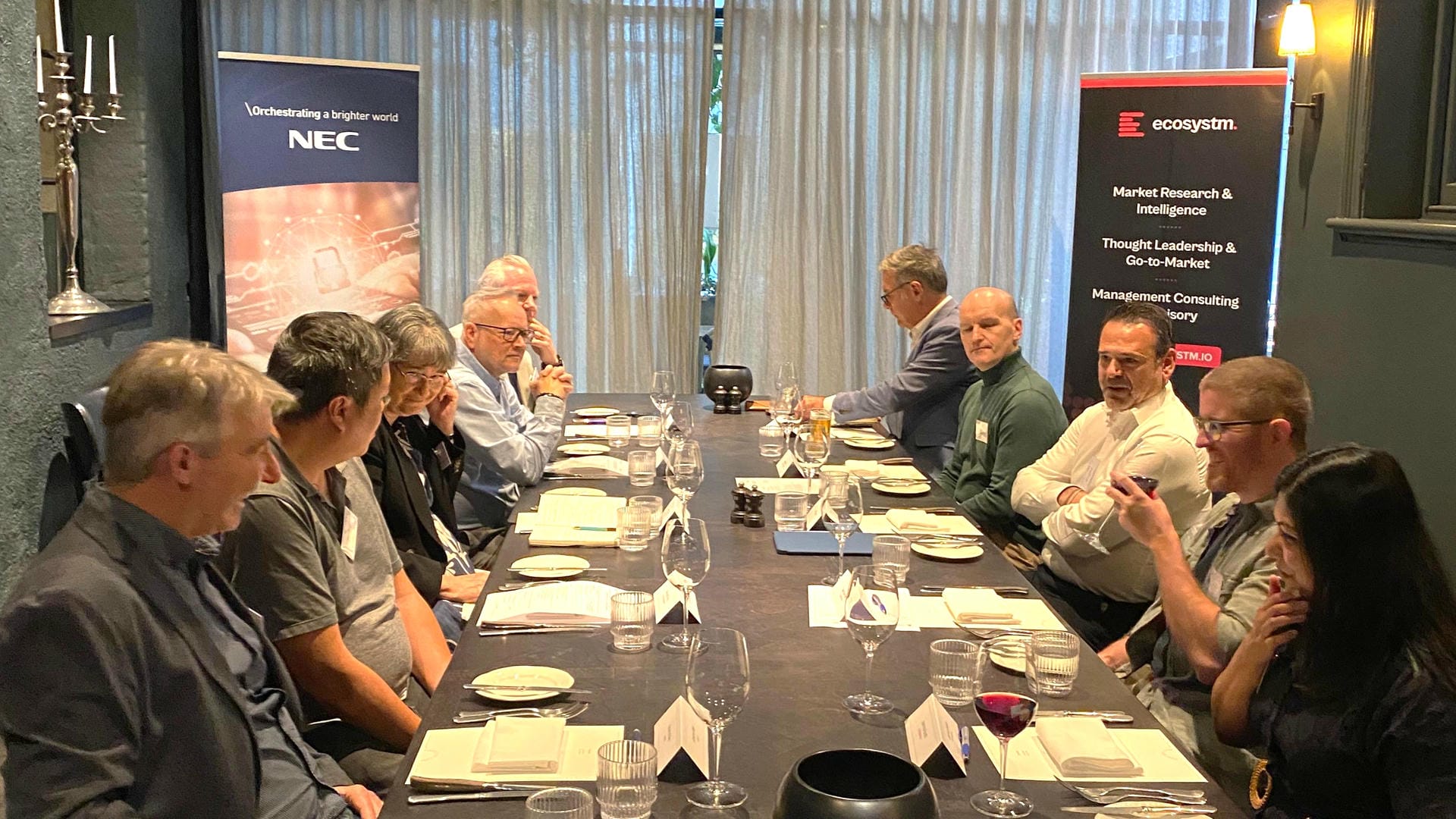
Please see below some images and key takeaways.
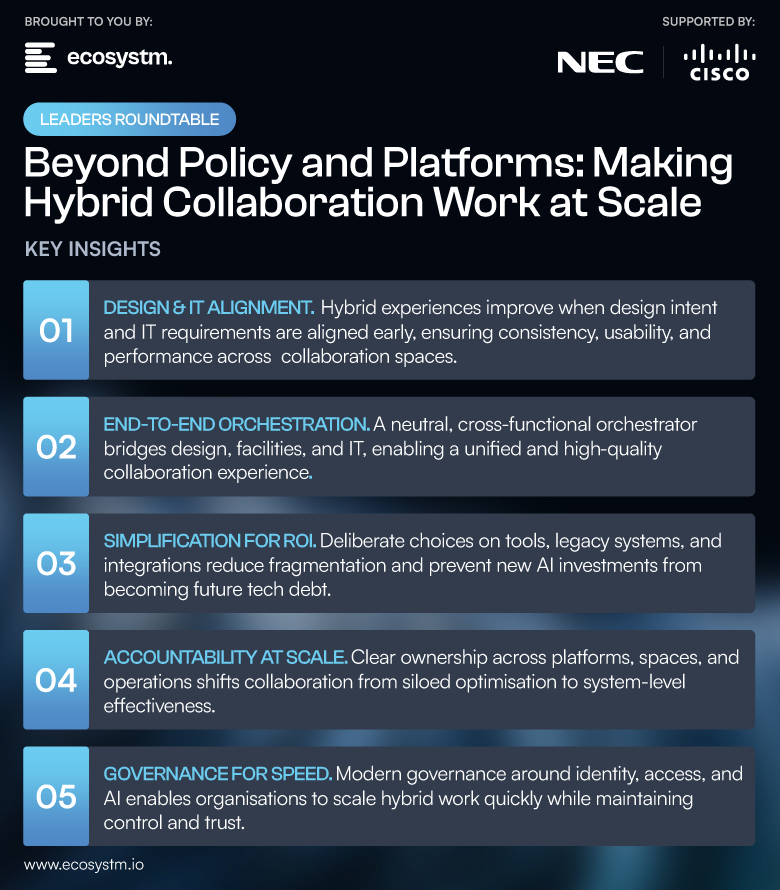

Key insights from the discussion:
➤ Better hybrid experiences depend on alignment between design and IT. When aesthetic intent and technical requirements are addressed together early, hybrid collaboration spaces are more consistent, usable, and productive.
➤ End‑to‑end ownership unlocks coherent collaboration outcomes. A neutral, cross‑functional orchestrator helps bridge the gaps between design, facilities, and IT, turning fragmented inputs into a single, high‑quality experience.
➤ Deliberate simplification improves ROI in hybrid environments. Making conscious decisions about which tools, legacy systems, and integrations to retain reduces fragmentation and prevents AI and new platforms from becoming future tech debt.
➤ Clear accountability strengthens collaboration as an ecosystem. Assigning ownership for the collaboration landscape – across platforms, spaces, and operations – helps organisations move from local optimisation to system‑level effectiveness.
➤ Modern governance enables speed without sacrificing trust. Evolving governance models around identity, privilege, and AI allows organisations to manage risk at pace while supporting flexible, high‑quality hybrid work.