

Hybrid cloud is now the default operating model for most organisations in Hong Kong. At the same time, AI adoption is accelerating, but infrastructure and operating models are lagging behind. As organisations move beyond pilots, the constraints are becoming clearer. Many environments remain fragmented, loosely integrated, and not built for real-time, AI-driven workloads.
Ecosystm research highlights where the gaps are most visible:
- 47% cite infrastructure limitations across compute, storage, and network as a barrier to scaling AI
- Only 40% are deploying AIOps, despite increasing operational complexity
- Just 11% report seamless integration across cloud and on-prem environments for AI workloads
What’s emerging is not just a scaling challenge, but an operating model problem. Organisations are starting to rethink how hybrid environments are structured and managed shifting toward more integrated, consistent, and automated approaches to operations. AIOps is beginning to play a more defined role, enabling teams to move beyond reactive issue management toward more predictive and adaptive operations.
At the centre of this shift is a more unified CloudOps model that brings governance, observability, automation, and cost visibility into a single operating layer. The goal is not just efficiency, but greater control and clarity across increasingly distributed environments.
Join us for an invitation-only executive roundtable to examine how organisations are modernising infrastructure and evolving operations to support AI at scale. In a closed discussion with peers, we will focus on practical approaches to reducing fragmentation, improving operational control, and making hybrid environments more workable.
Key Takeaways:
- Modernising for AI Scale. Addressing infrastructure constraints across compute, storage, and hybrid integration
- From Fragmentation to Integration. Managing hybrid environments through more consistent operating models
- Operationalising AIOps. Moving toward more predictive and automated IT operations
- Closing the Integration Gap. Improving consistency across cloud and on-prem environments
- Cost, Control & Visibility. Strengthening oversight across distributed hybrid estates

HPE
Hewlett Packard Enterprise, a company that provides enterprise-focused IT products and services like servers, storage, networking, and software.

Sash Mukherjee
VP Industry Insights, Ecosystm
This event has already concluded.
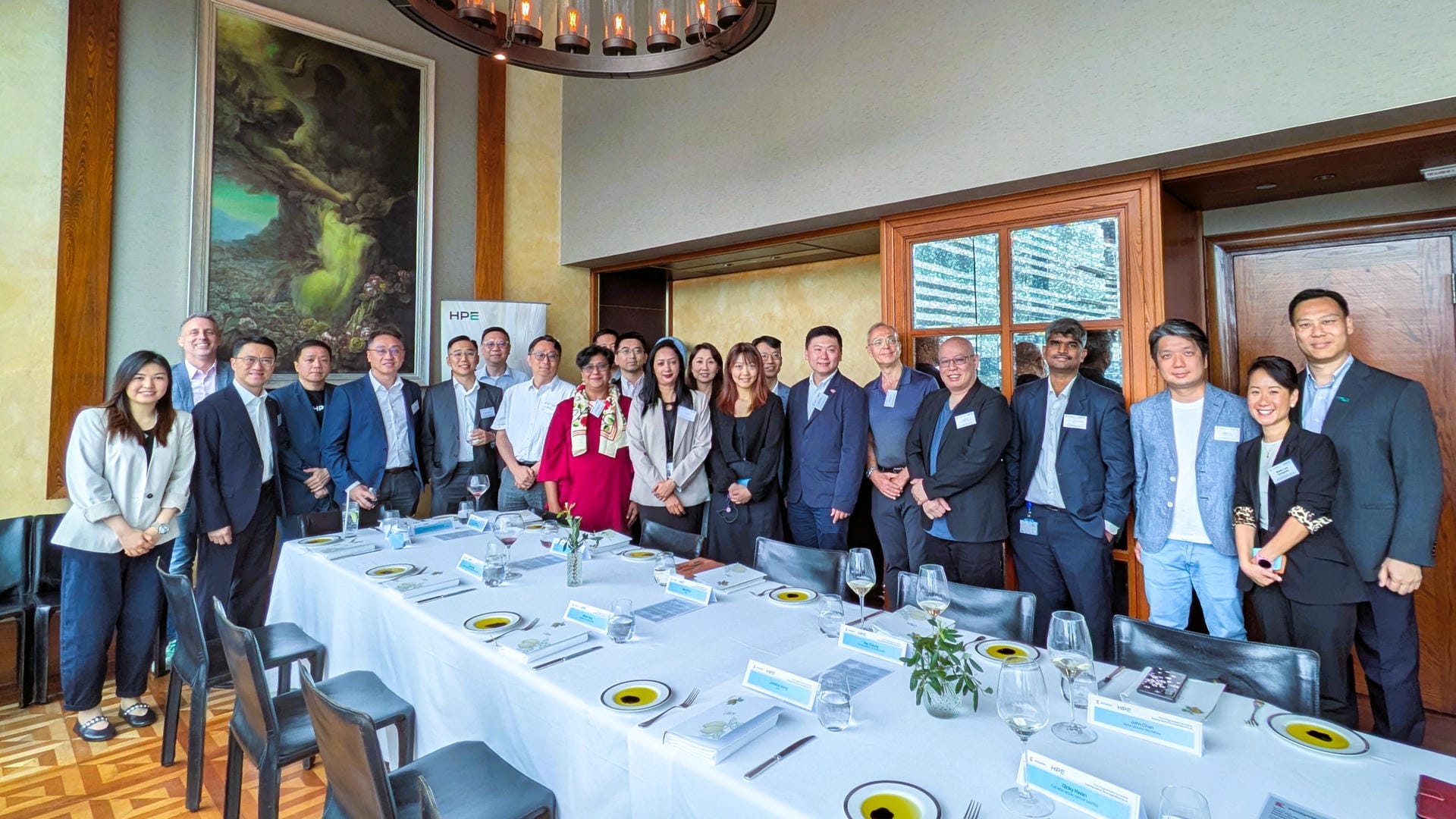
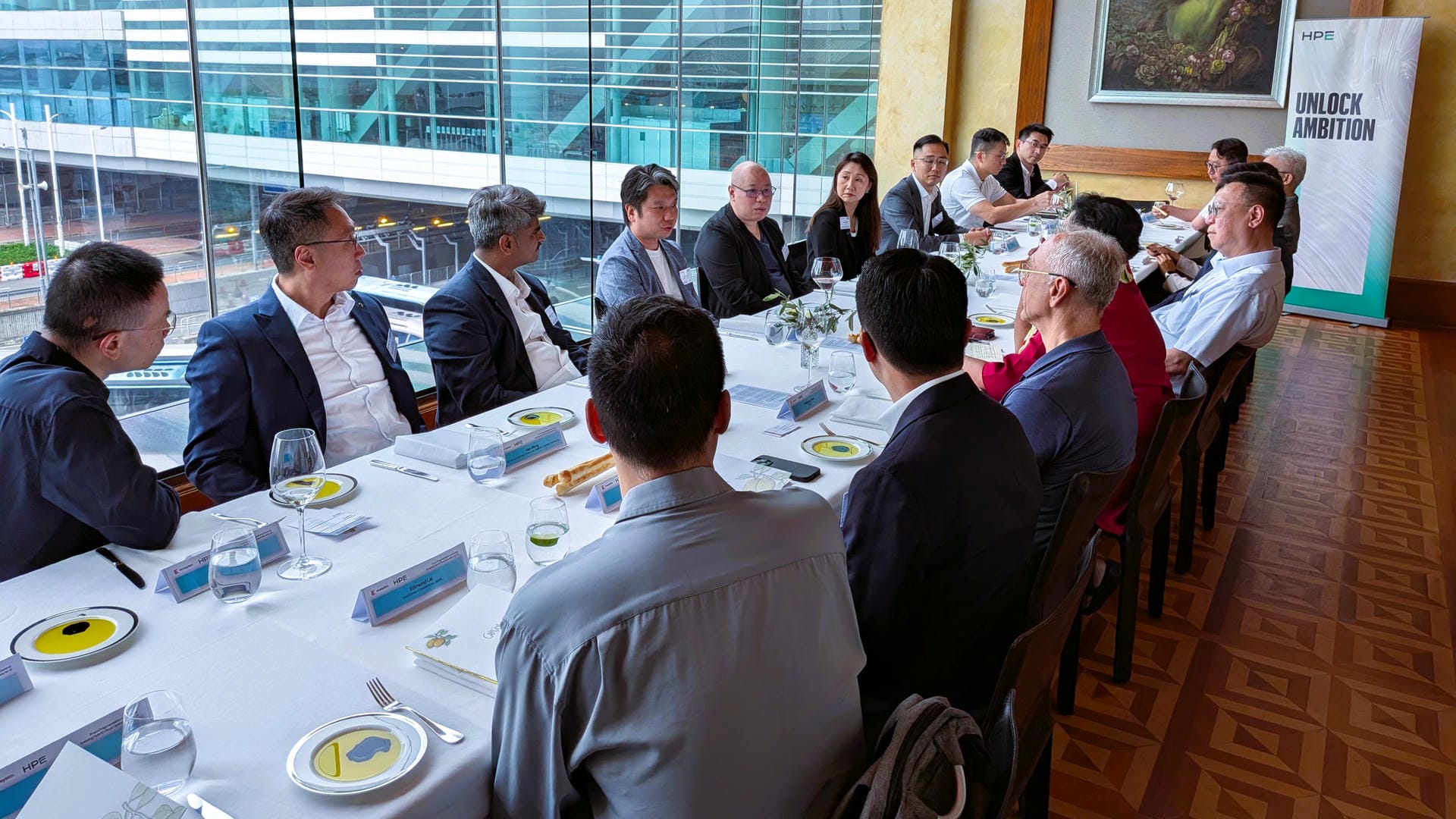
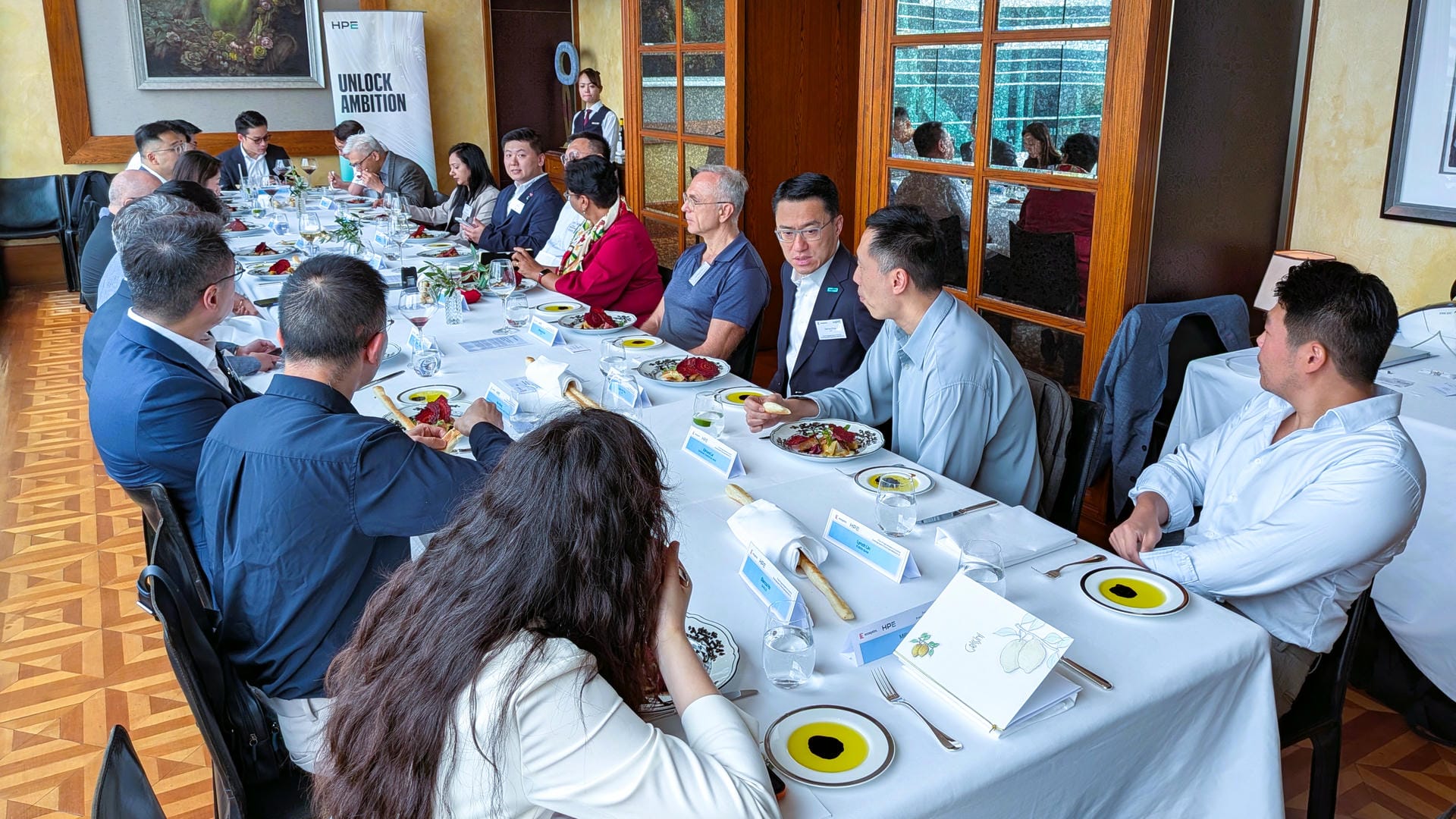
Please see below some images and key takeaways.
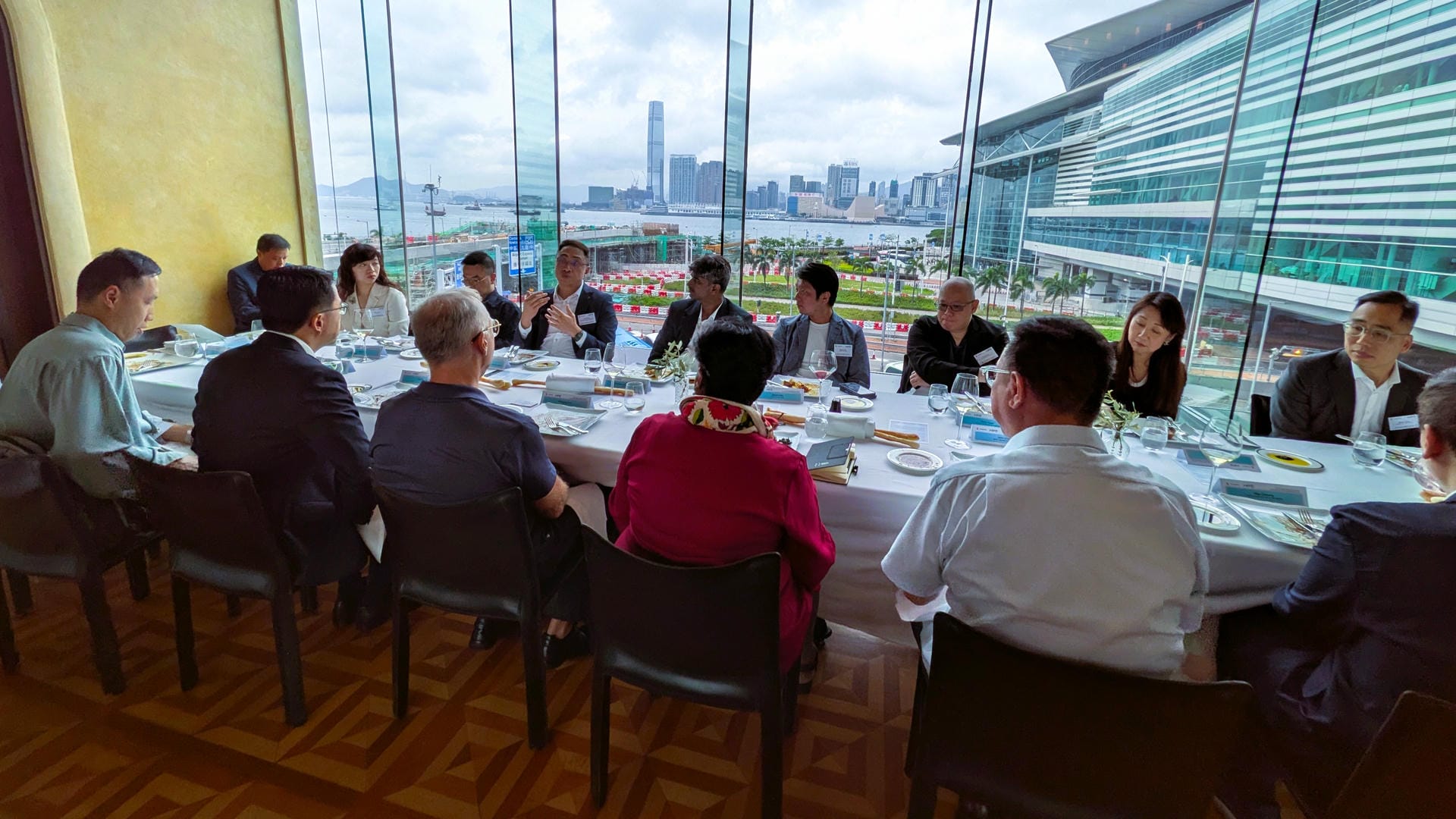
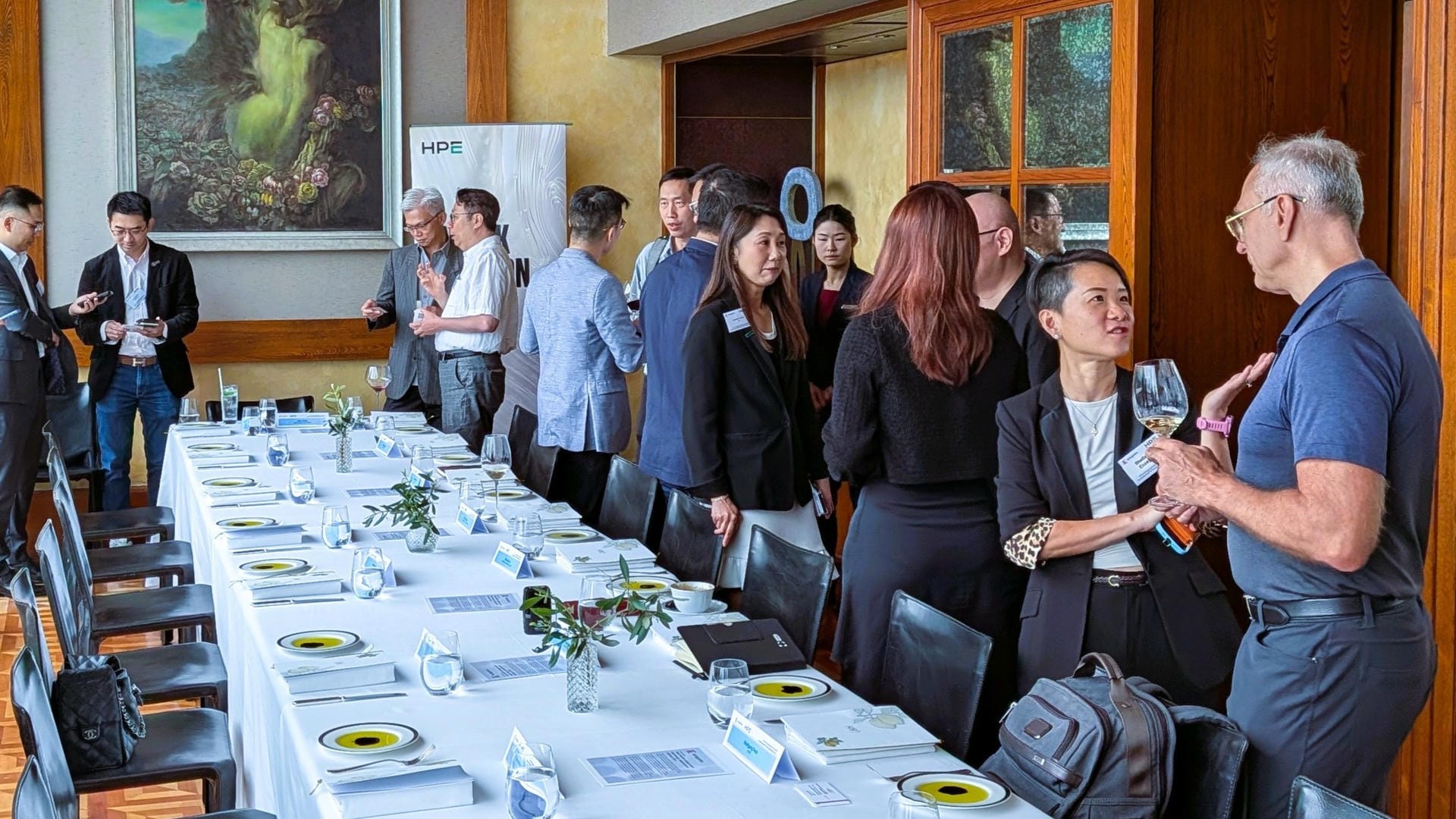
So, what’s actually working – and what isn’t – for Hong Kong organisations?
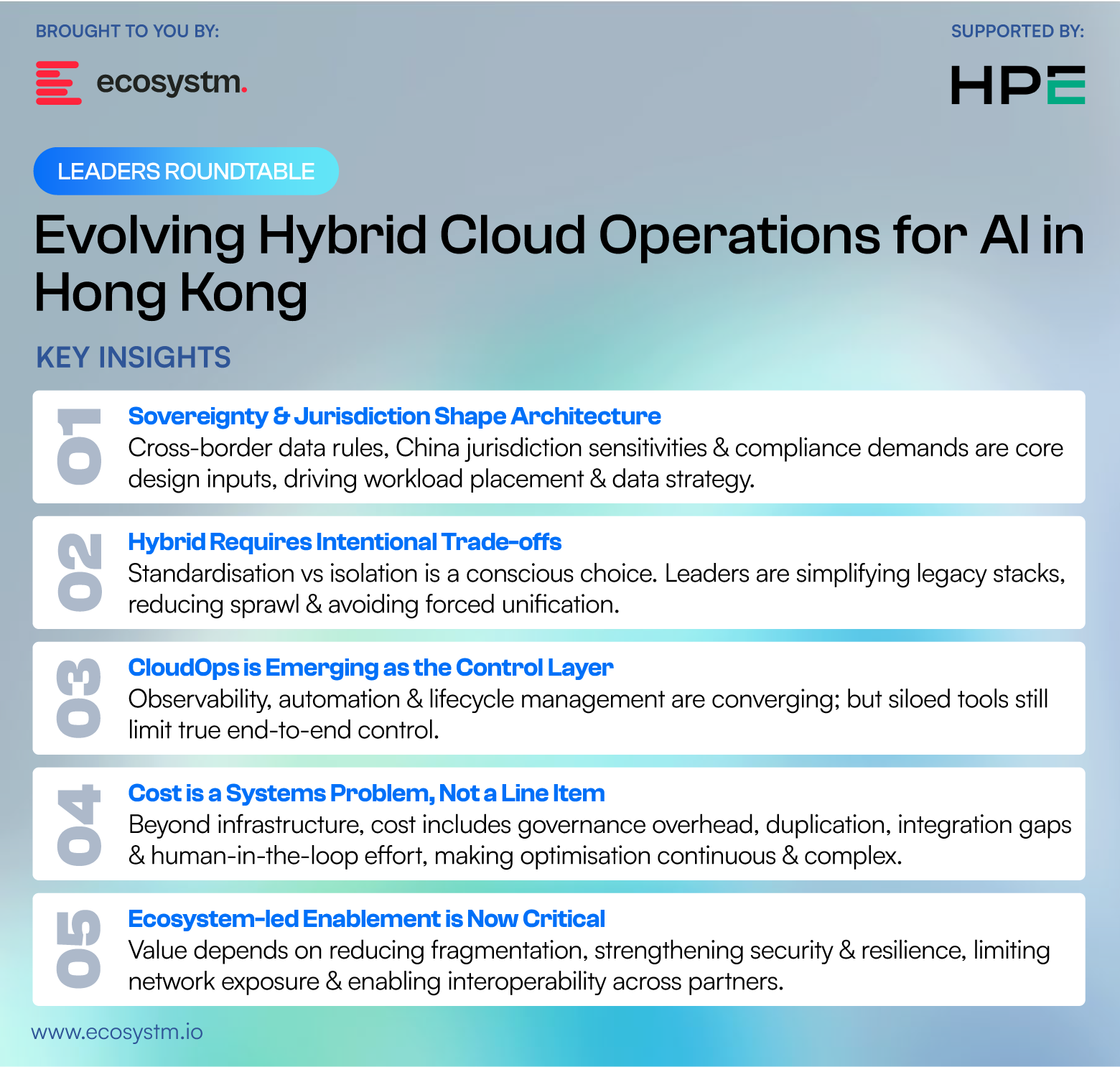
➤ Sovereignty & jurisdiction are core design constraints. Hybrid strategies are shaped as much by regulation as by technology. Cross-border data rules, China jurisdiction sensitivities, and evolving compliance frameworks are forcing decisions on where data sits, how it moves, and how workloads are distributed. These are not edge factors; they define architecture.
➤ Intentional hybrid requires explicit trade-offs. A fully unified environment is neither realistic nor optimal. Organisations are deliberately choosing what to standardise versus isolate based on risk, latency, and compliance. This is driving simplification of legacy stacks, reduced platform sprawl, and more selective integration.
➤ CloudOps can become the control layer. Hybrid management is an operational challenge. CloudOps models are converging provisioning, observability, automation, and lifecycle management. But siloed tools still limit end-to-end visibility and consistent control.
➤ Cost is multi-dimensional and harder to optimise. Cost extends beyond infrastructure to governance overhead, duplicated tooling, integration gaps, and human-in-the-loop effort. As AI scales, optimisation becomes a continuous trade-off between cost, control, and complexity.
➤ Tech providers focus on ecosystem enablement. Value now depends on reducing fragmentation across environments – strengthening security, improving resilience, limiting network exposure, and enabling interoperability across a broader partner ecosystem.
The takeaway: hybrid isn’t the problem; unmanaged complexity is.