
Hybrid cloud is now the default operating model for most organisations in Australia. Yet many environments are still run through fragmented processes and legacy virtualisation platforms designed for more centralised infrastructure. At the same time, cloud repatriation debates and shifting virtualisation economics are pushing organisations to reassess how hybrid environments are structured and operated, especially as AI workloads increase operational demands.
Ecosystm research highlights how Australian organisations are responding:
- 57% are prioritising cloud & business resilience in tech modernisation
- 73% expect to increase investment in hybrid cloud management in 2026
- Yet only 34% are increasing focus on AIOps
Hybrid environments are expanding, but operational models are not evolving at the same pace.
A unified CloudOps approach simplifies hybrid operations and restores control. By combining governance, observability, automation, and cost visibility in one operating model, organisations can move beyond fragmented management of on-prem, cloud, and virtualisation environments. This enables streamlined provisioning, stronger oversight, and automated remediation, without a disruptive infrastructure reset.
Join us for an invitation-only executive roundtable examining how organisations can adapt their operating models to manage increasingly complex hybrid environments. In a closed discussion with peers, we will explore practical approaches to bringing greater consistency, visibility, and control to hybrid cloud operations.
Key Takeaways
- From Firefighting to Automation. How organisations can shift from reactive troubleshooting to proactive, automated operations
- One CloudOps Model. Replacing fragmented processes with a unified approach to managing hybrid environments
- Clearer Cost Accountability. Using visibility into consumption, waste, and ROI to strengthen financial control
- Operating Hybrid at AI Scale. The role CloudOps and AIOps will play as hybrid environments and AI workloads expand

HPE
Hewlett Packard Enterprise, a company that provides enterprise-focused IT products and services like servers, storage, networking, and software.

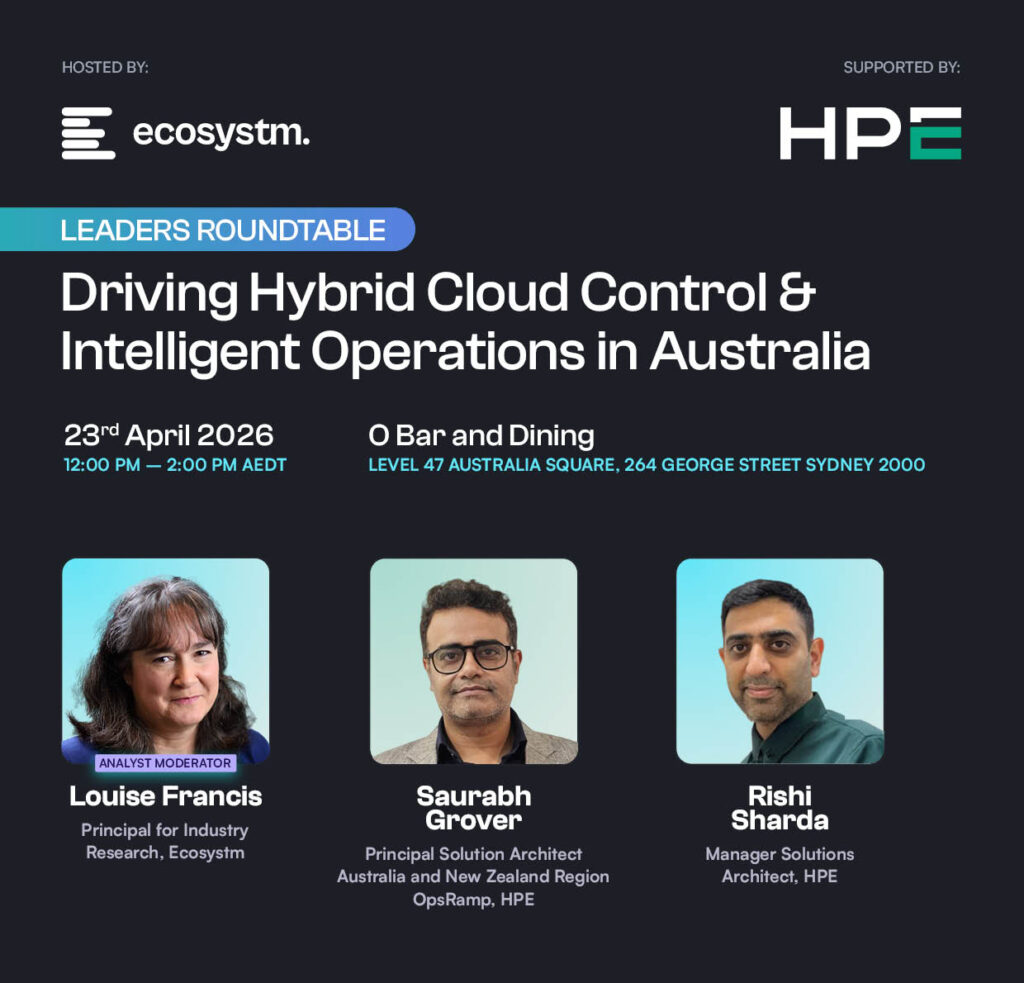
Louise Francis
Country Manager, New Zealand & Principal for Industry Research
Saurabh Grover
Principal Solution Architect Australia and New Zealand Region OpsRamp, HPE

Rishi Sharda
Manager Systems Architect, HPE
Register for this Event
This event has already concluded.
Please see below some images and key takeaways.
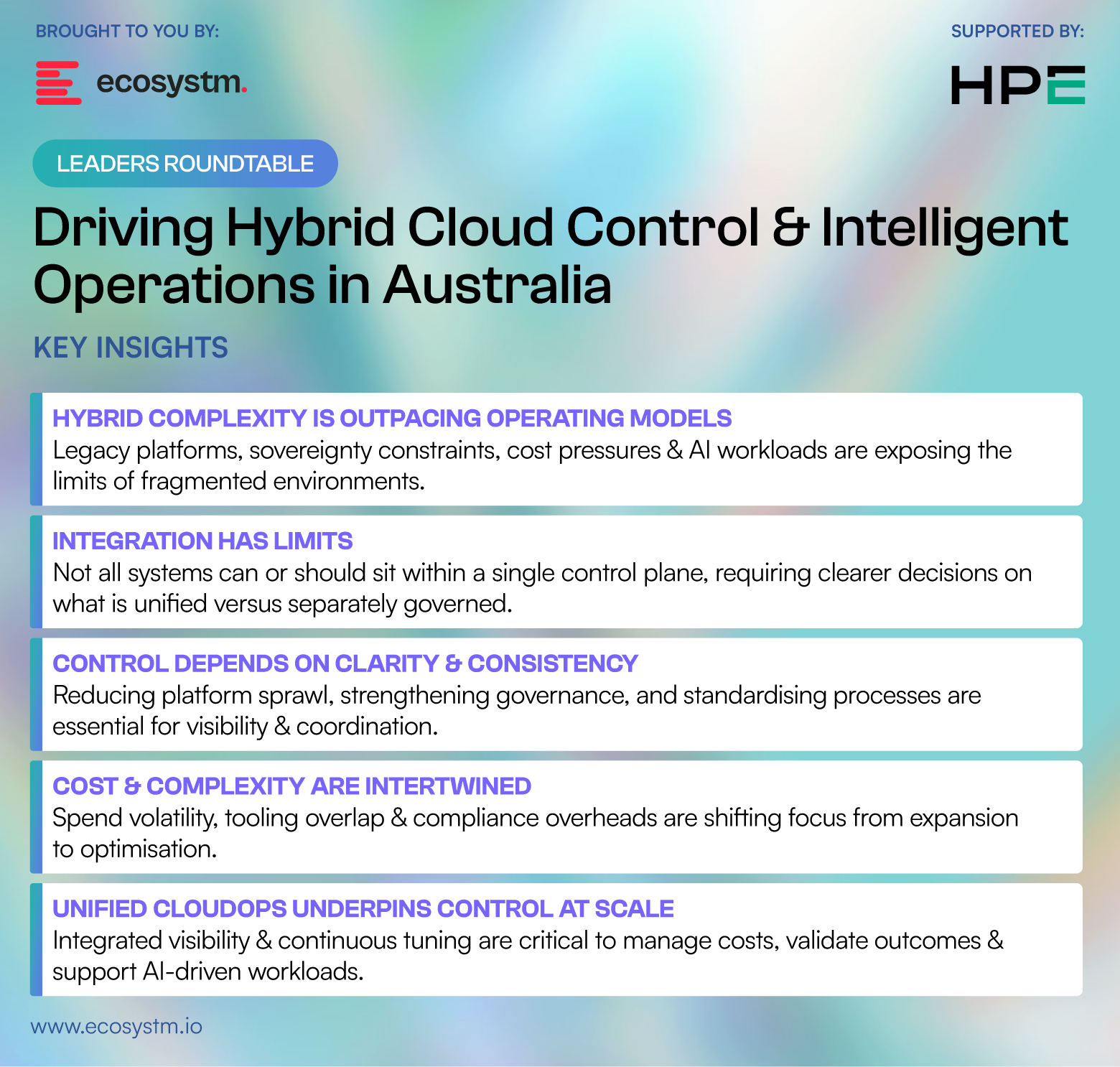
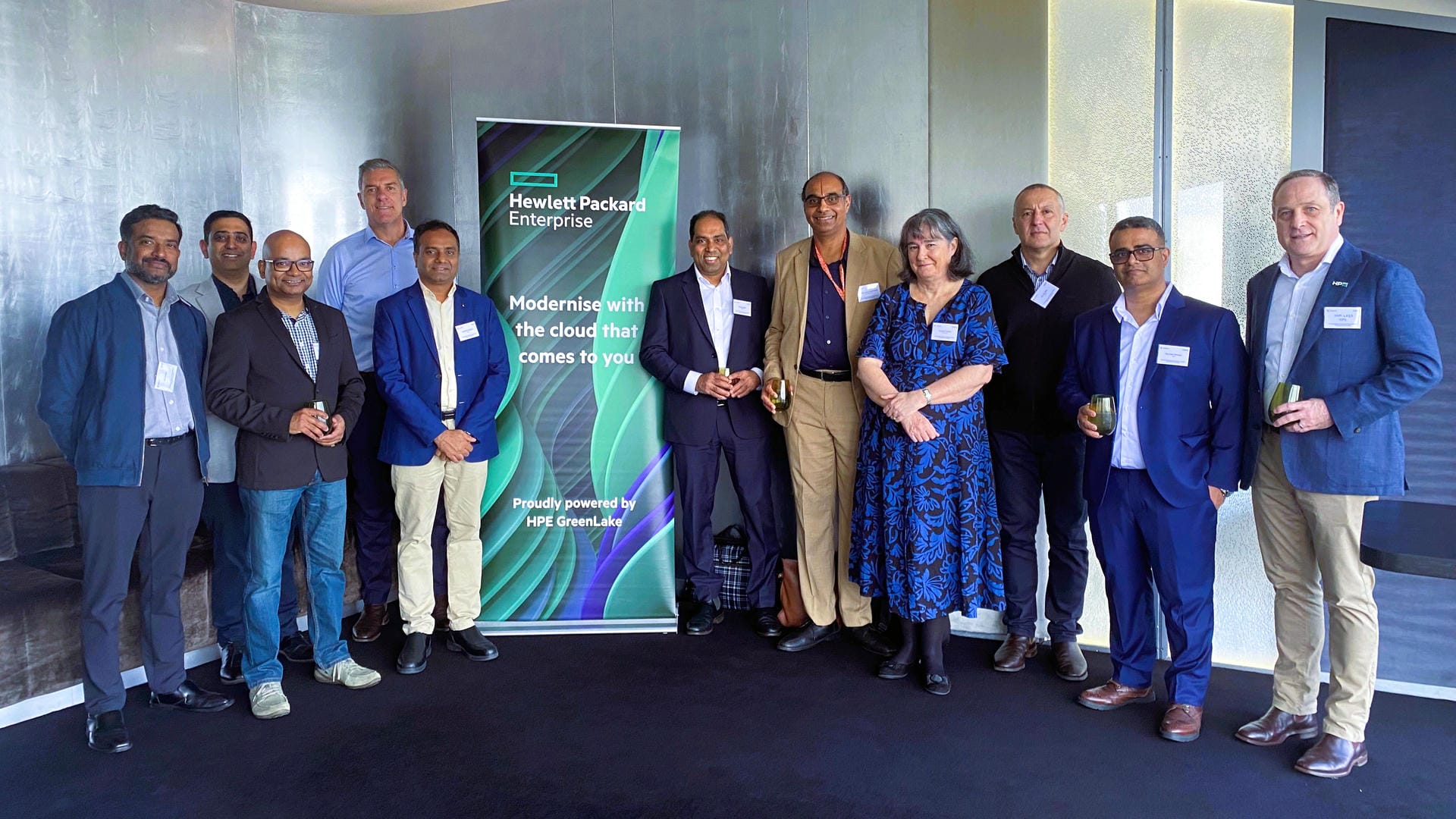
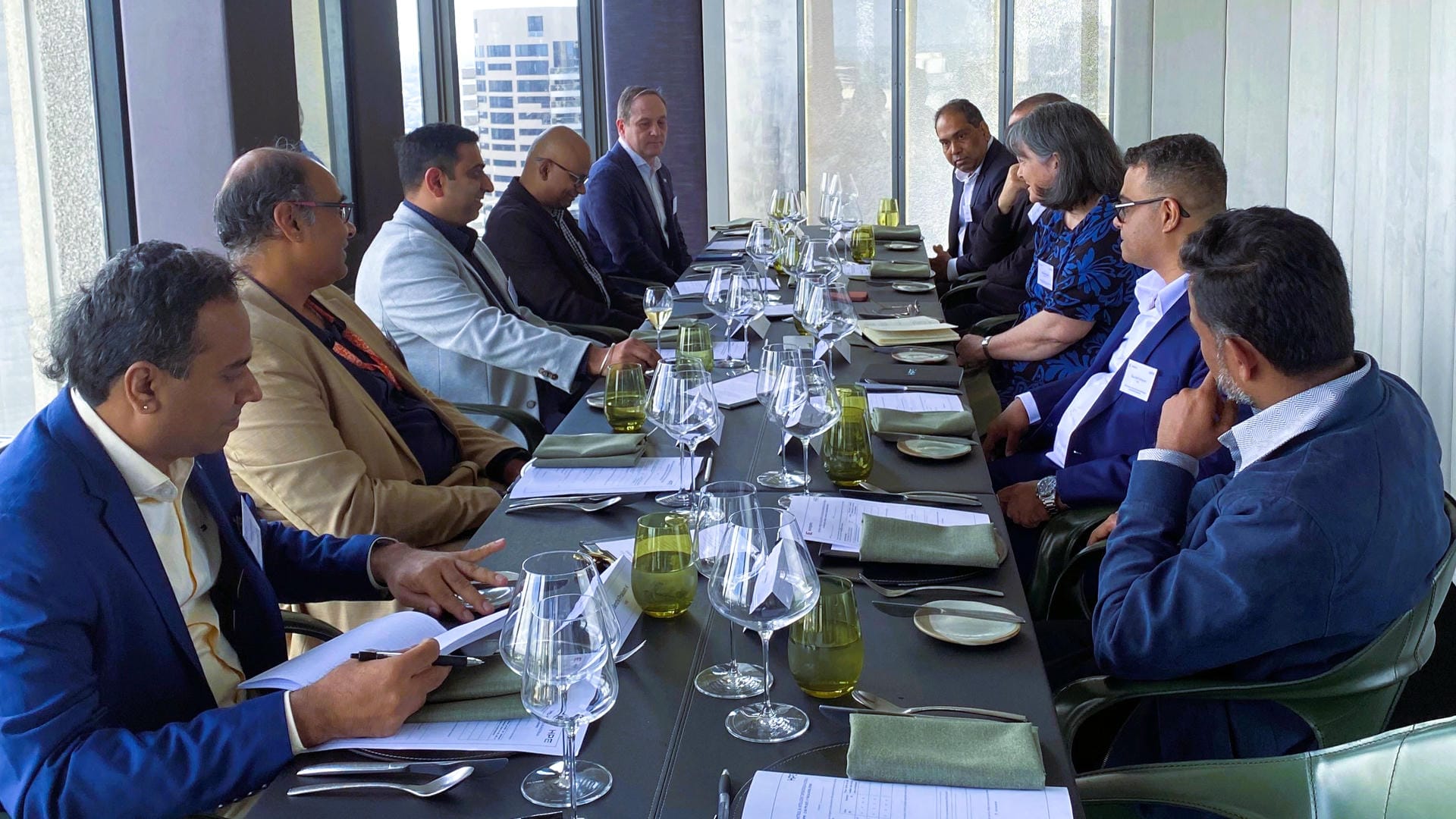
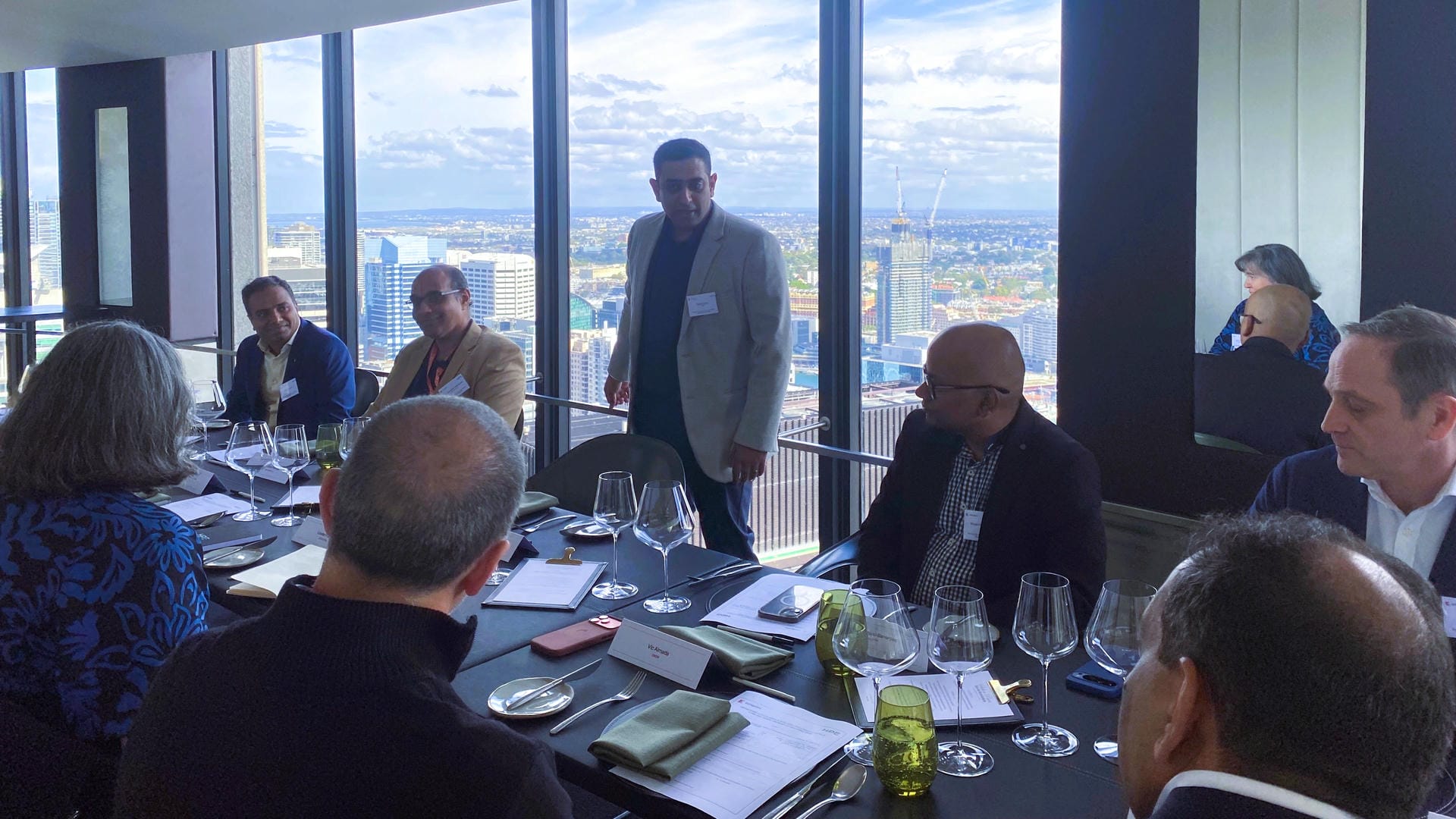
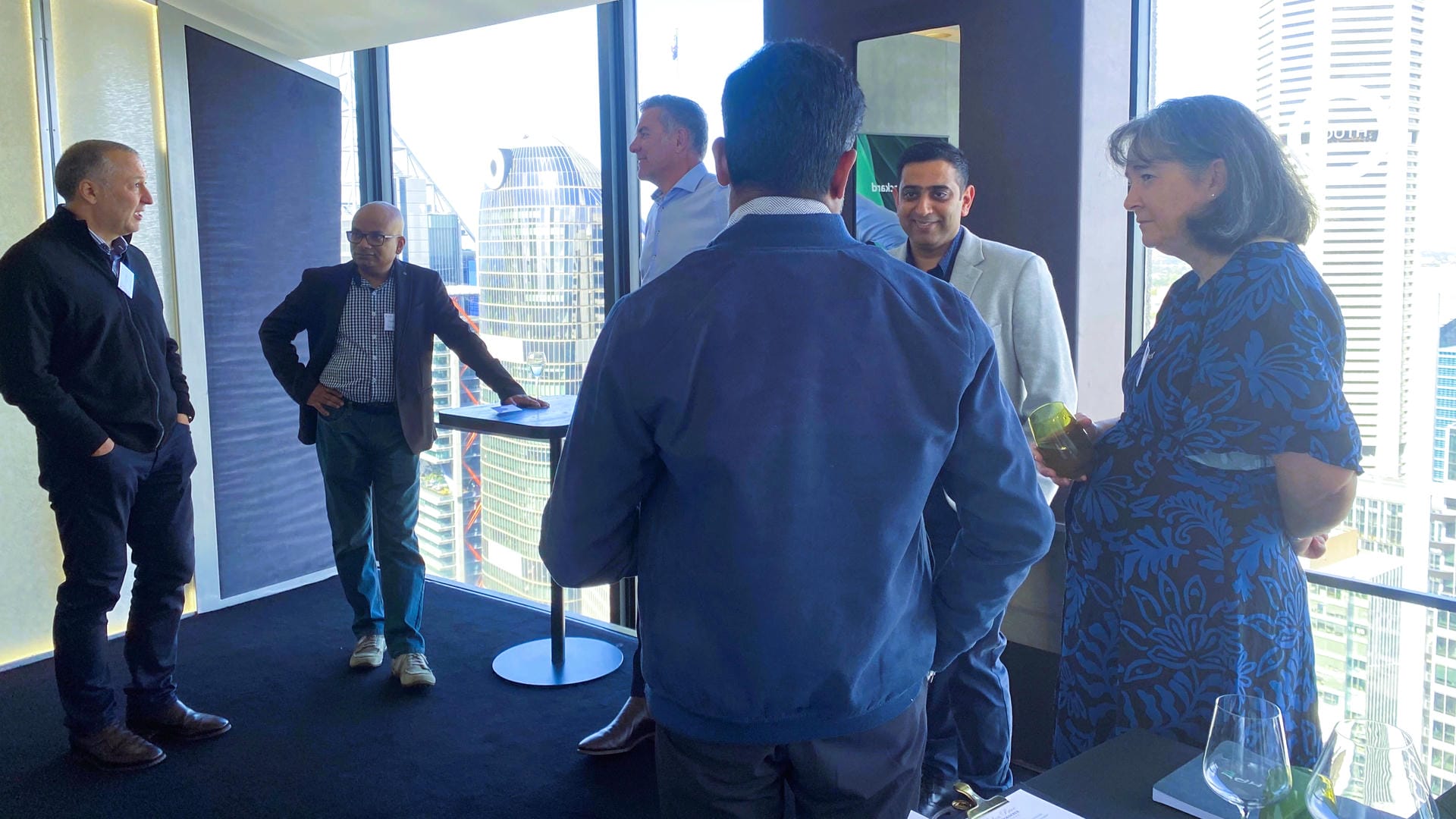
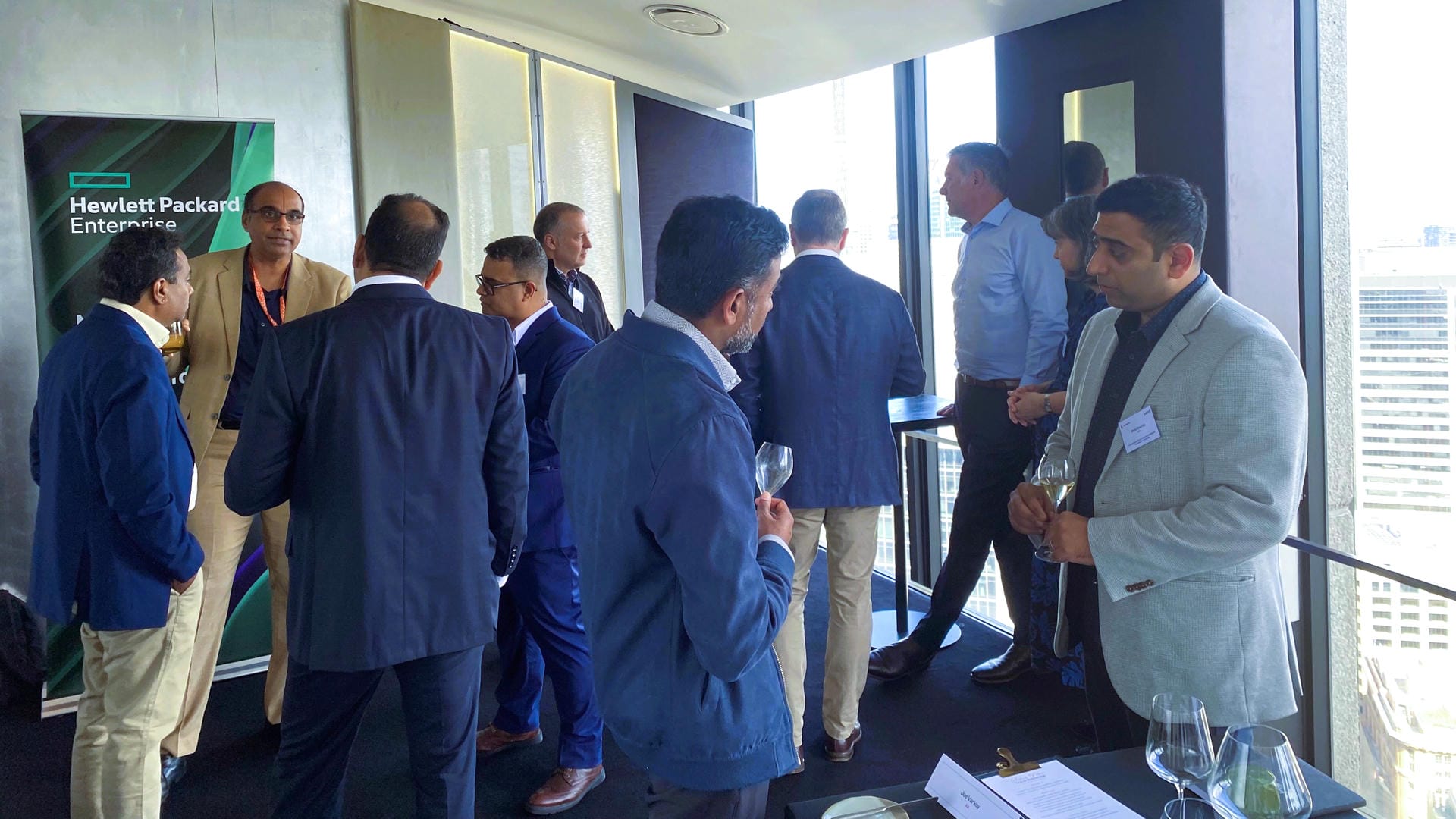
The session focused on how organisations are unifying CloudOps, driving cross-stack automation, and moving towards more intentional operating models.
Here are some discussion highlights:
➤ Hybrid complexity is outpacing operating models. Legacy platforms, sovereignty constraints, cost pressures, and AI workloads are exposing the limits of fragmented environments.
➤ Integration has limits. Not all systems can or should sit within a single control plane, requiring more deliberate decisions on what is unified versus separately governed.
➤ Control depends on clarity and consistency. Reducing platform sprawl, strengthening governance, and standardising processes are becoming essential for visibility and coordination.
➤ Cost and complexity are increasingly intertwined. Spend volatility, tooling overlap, and compliance overheads are shifting focus from expansion to optimisation.
➤ Unified CloudOps underpins control at scale. Integrated visibility and continuous tuning are critical to manage costs, validate outcomes, and support AI-driven workloads.