
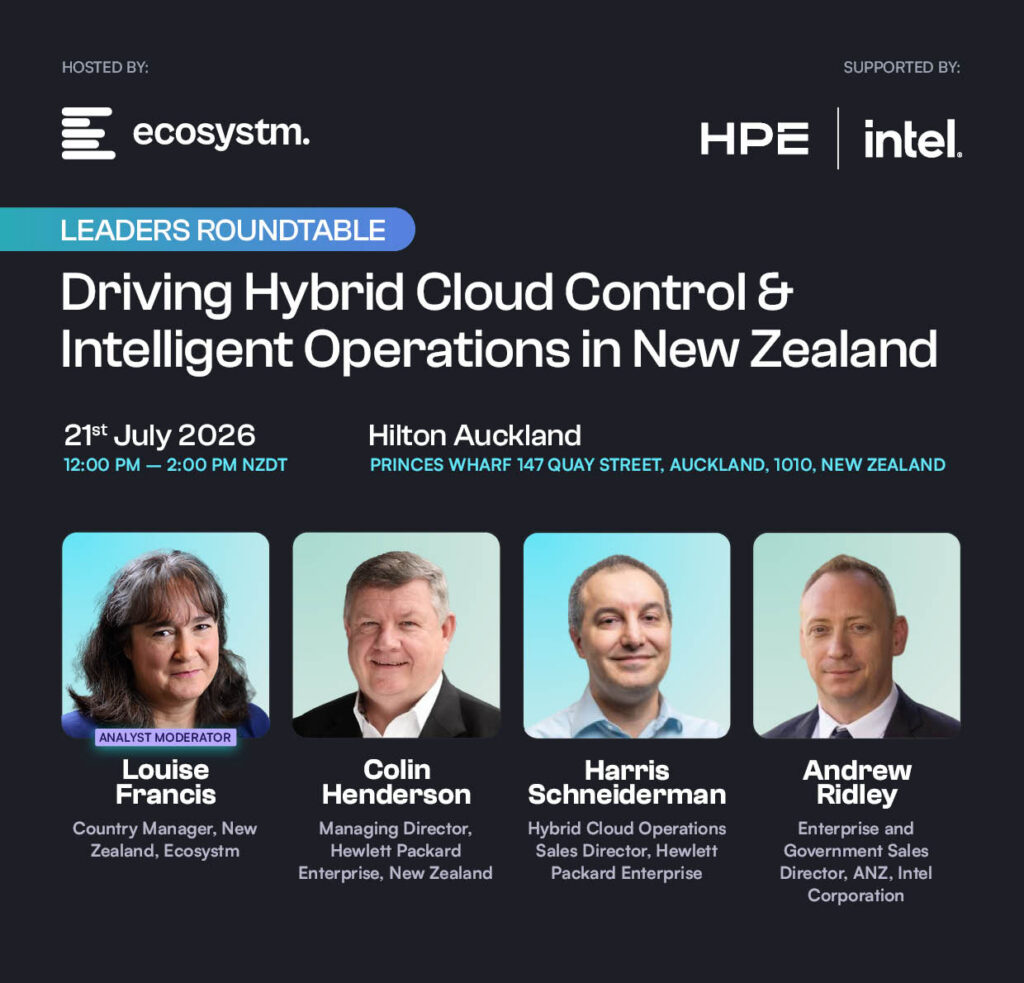
Hybrid cloud is now the default operating model for most organisations in New Zealand. However, many organisations continue to manage these environments through fragmented operating models and legacy virtualisation platforms, creating challenges around visibility, consistency, and control. As cloud repatriation, sovereignty requirements, and AI-driven workloads reshape infrastructure priorities, organisations are re-evaluating how hybrid environments are structured and governed to support future demands.
Ecosystm research highlights a clear imbalance in how organisations are approaching hybrid cloud: strong focus on adoption and resilience, but slower progress in the operational and economic capabilities needed to run these environments efficiently at scale.
- 57% prioritise cloud & business resilience in modernisation programmes
- 73% expect to increase hybrid cloud investment over the next year
- Yet only 34% are prioritising Cloud & AIOps, limiting their ability to optimise performance, cost & operational efficiency
As AI and agentic workloads scale, hybrid environments are expanding faster than the operating models designed to manage them, creating fragmentation across control and visibility. A unified CloudOps approach addresses this by bringing automation, observability, and cost management into a single operating layer, enabling faster provisioning, tighter control, and automated remediation without major infrastructure change.
Join us for an invitation-only leaders roundtable exploring how New Zealand organisations are evolving their operating models to manage increasingly complex hybrid environments. In a closed peer discussion, we will focus on practical approaches to improving consistency, visibility, and control across hybrid cloud operations.
The discussion will cover:
- Reducing Operational Friction. How organisations are reducing reactive workload through greater automation and standardisation of hybrid operations
- Converging Cloud Operations. Moving from fragmented processes toward a unified operating approach across hybrid environments
- Making Cost & Usage Visible. Strengthening financial control through clearer visibility into consumption, inefficiencies, and ROI
- Operating Hybrid Under AI Demand. How CloudOps and AIOps are evolving as AI workloads place new pressure on infrastructure and operations

HPE
Hewlett Packard Enterprise, a company that provides enterprise-focused IT products and services like servers, storage, networking, and software.

HPE
Intel Corporation is a global leader in semiconductor design and manufacturing, providing the technological building blocks for an increasingly smart and connected world.

Louise Francis
Country Manager, New Zealand & Principal for Industry Research

Colin Henderson
Managing Director, Hewlett Packard Enterprise, New Zealand

Harris Schneiderman
Hybrid Cloud Operations, Sales Director, HPE

Andrew Ridley
Enterprise and Government Sales Director, ANZ, Intel Corporation
Register for this Event
This event has already concluded.
Please see below some images and key takeaways.
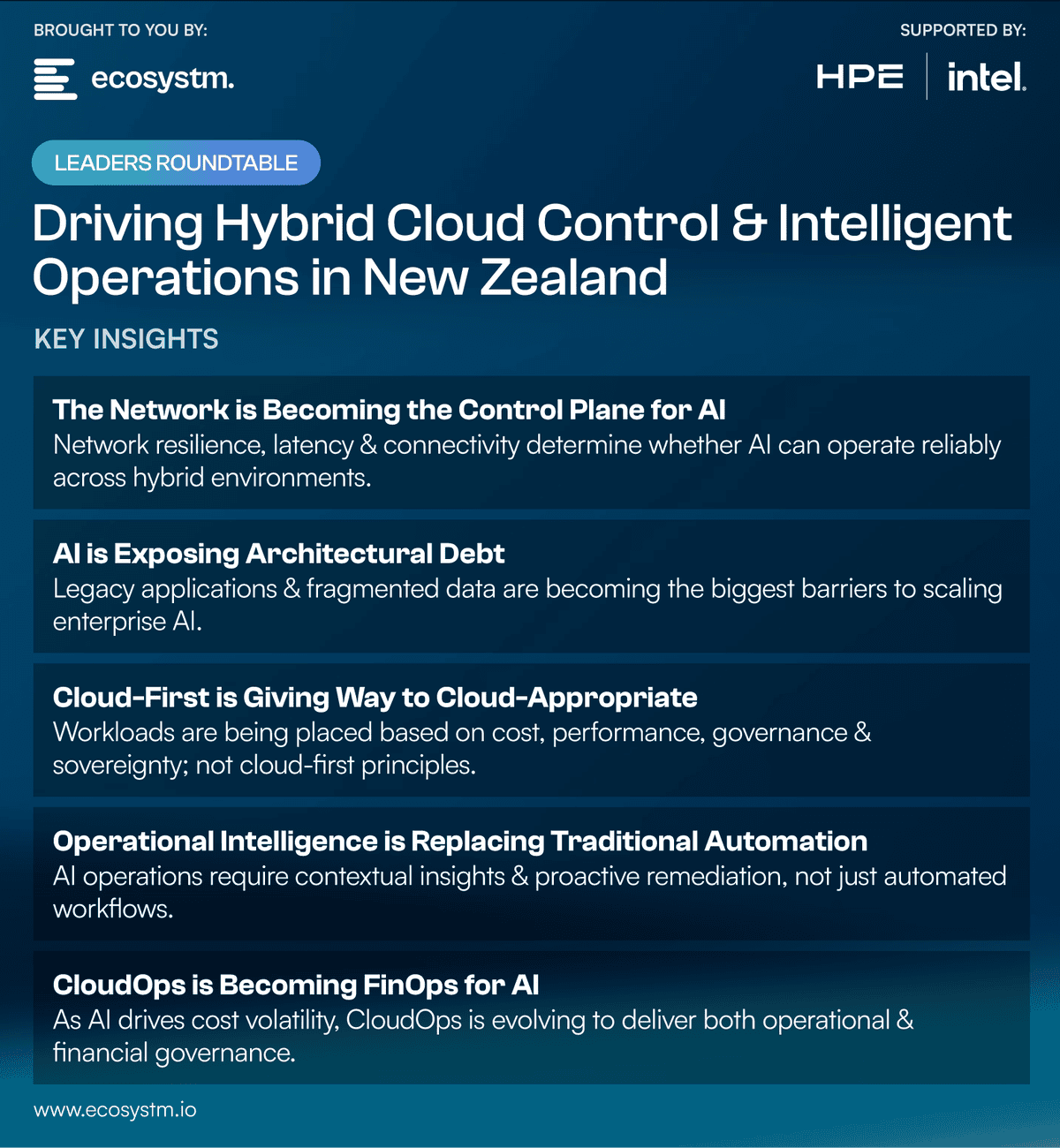
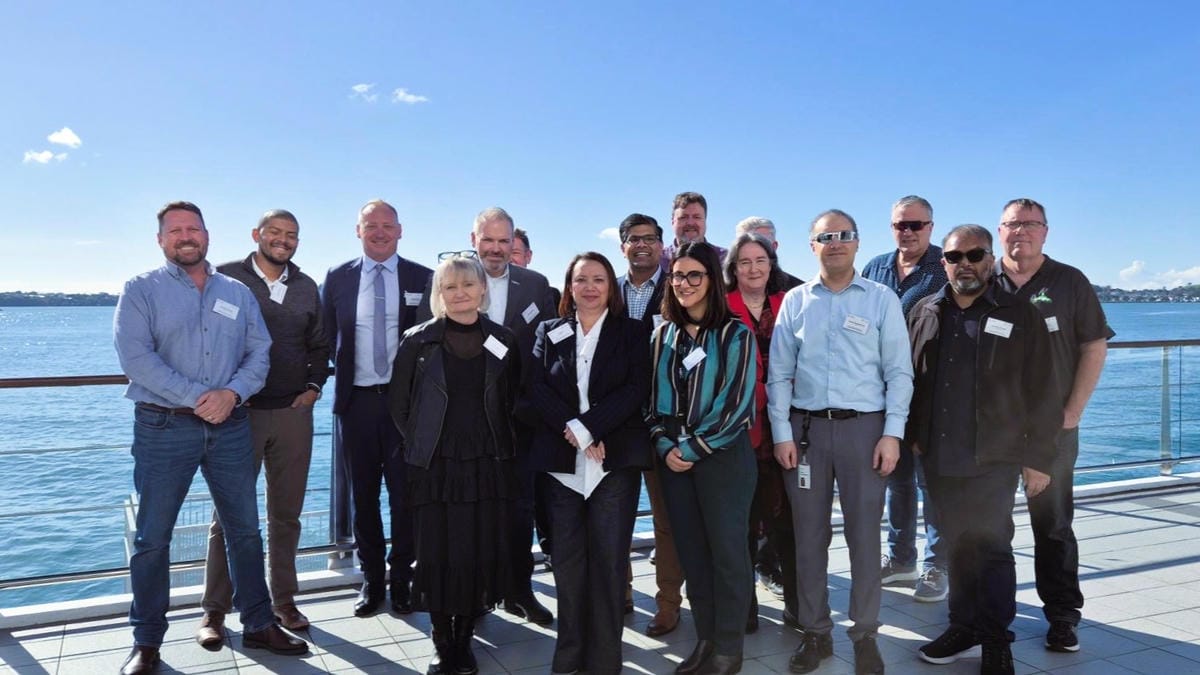
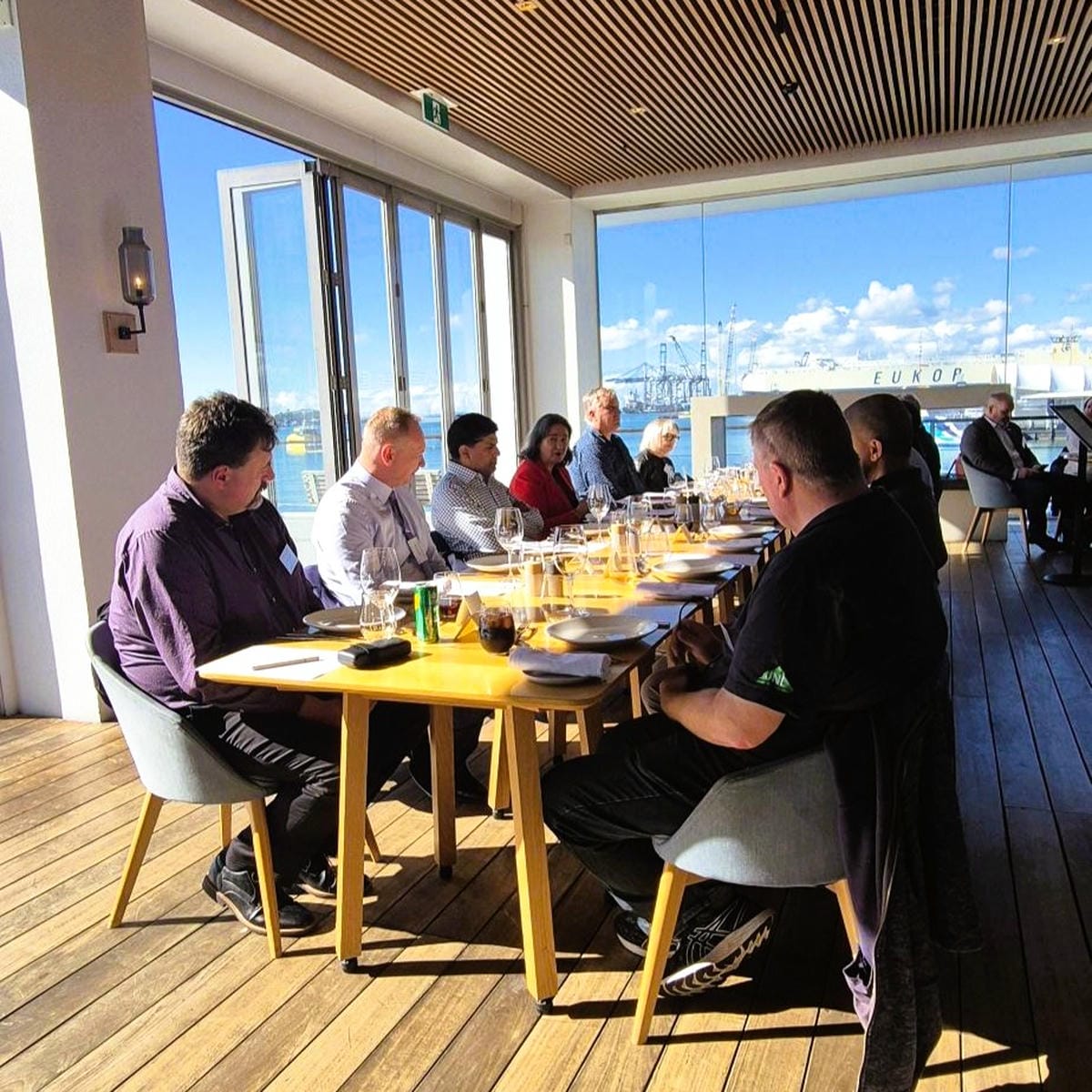

Senior technology leaders from some of New Zealand’s largest organisations discussed how they are adapting their operating models, modernising infrastructure, and supporting AI-driven workloads. Key insights from the discussion include:
➤ The network is becoming the control plane for AI. AI is making network resilience, latency, and connectivity foundational to hybrid cloud. As workloads span cloud, edge, and on-premises environments, the network increasingly determines whether AI can operate reliably at scale.
➤ AI is exposing architectural debt. AI is revealing the limits of legacy applications, fragmented data, and centralised architectures. Scaling AI increasingly depends on modernising the underlying architecture, not simply adding new AI capabilities.
➤ Cloud-First is giving way to Cloud-Appropriate. AI is reshaping infrastructure strategy. Organisations are placing workloads where they best balance performance, cost, governance, and sovereignty, rather than defaulting to public cloud.
➤ Operational intelligence is replacing traditional automation. As hybrid environments become more complex, organisations need AI-driven operational intelligence that provides context, predicts issues, and enables proactive operations – not just automated tasks.
➤ CloudOps is becoming FinOps for AI. AI is making infrastructure costs more dynamic and less predictable. CloudOps is evolving to combine operational visibility with financial governance, helping organisations optimise AI investments at scale.