


1. AI Activity is Ahead of Formal Strategy
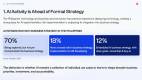
The Philippines’ technology and business-services sector has extensive experience deploying technology at scale, creating a strong base for AI experimentation. But AI experimentation is moving faster than its integration into business strategy.
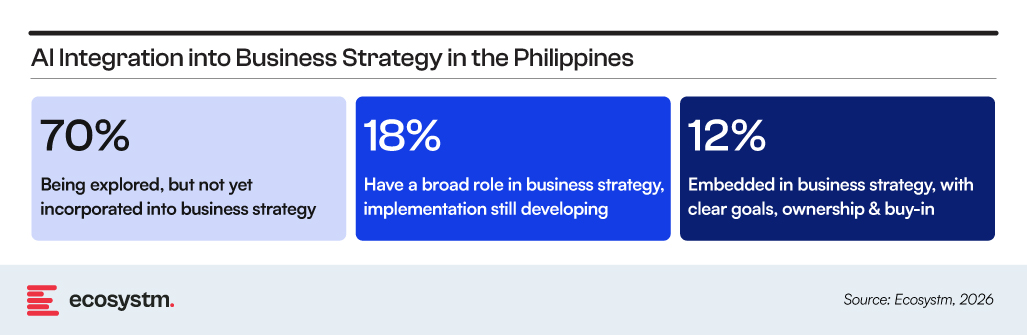
The distinction is whether AI remains a collection of individual use cases or starts to shape broader business priorities, investment, and accountability.
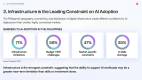
2. Infrastructure is the Leading Constraint on AI Adoption
The Philippines’ geography, connectivity, and distribution of digital infrastructure create different conditions for AI deployment than smaller, highly connected markets.
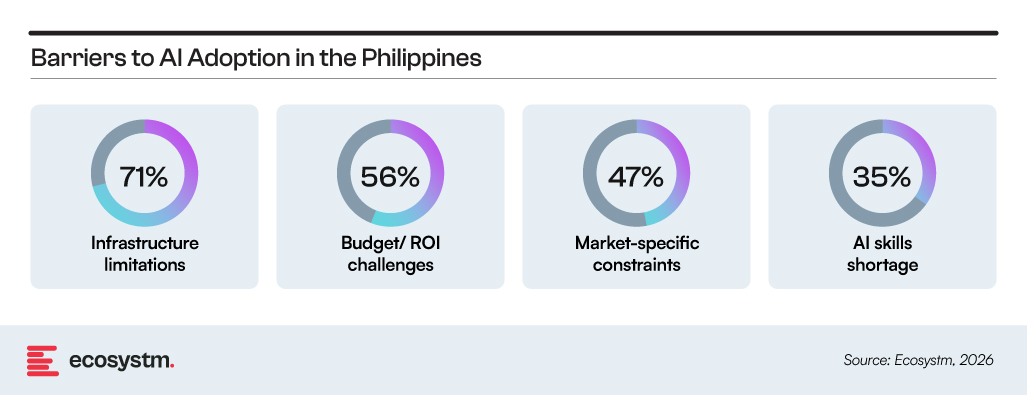
Infrastructure is the strongest constraint, suggesting that the ability to support AI workloads may be a greater near-term limitation than skills or investment alone.
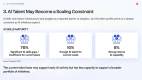
3. AI Talent May Become a Scaling Constraint
AI skills rank below infrastructure and budget as a reported barrier to adoption, but the talent profile points to a deeper constraint as AI initiatives expand.
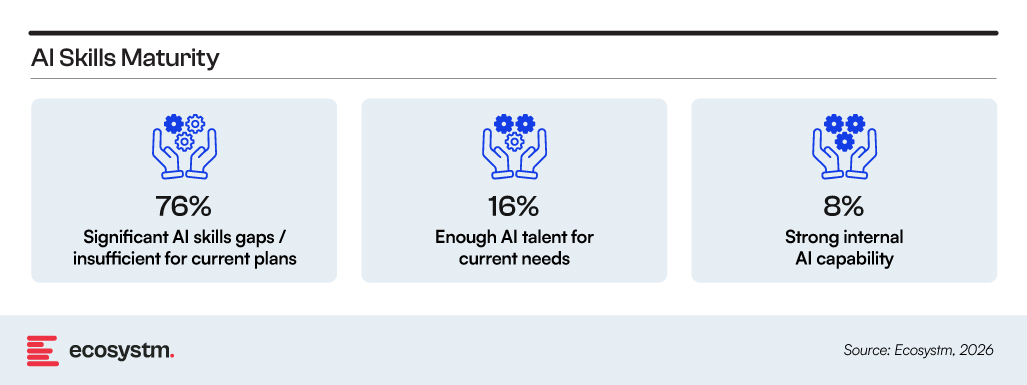
The current talent base may support early AI activity, but has less capacity to support a broader portfolio of initiatives.
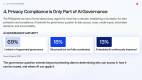
4. Privacy Compliance Does Not Guarantee Effective AI Governance
The Philippines has had a formal data privacy regime for more than a decade, establishing a foundation for data protection and compliance. AI extends the governance question to data access, reuse, model inputs, automated decisions, and accountability.
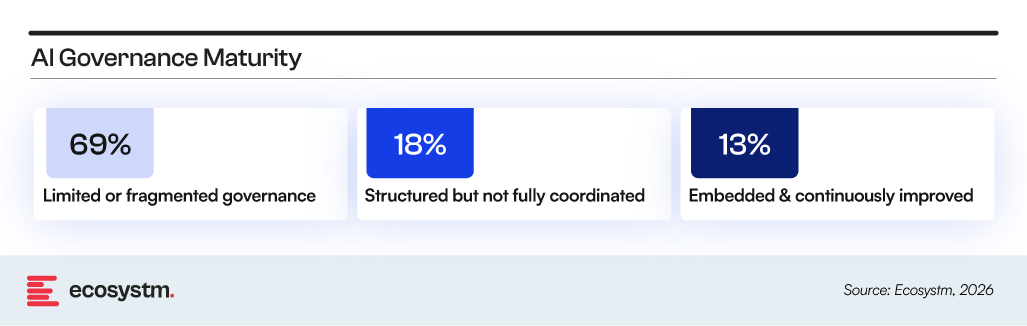
The governance question extends beyond protecting data to determining who can access it, how it can be reused, and where AI can apply it.
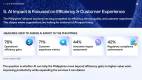
5. AI Impact is Focused on Efficiency and Customer Experience
The Philippines’ services economy has long competed on efficiency, service quality, and customer experience. This shapes where organisations are looking for evidence of AI impact today.
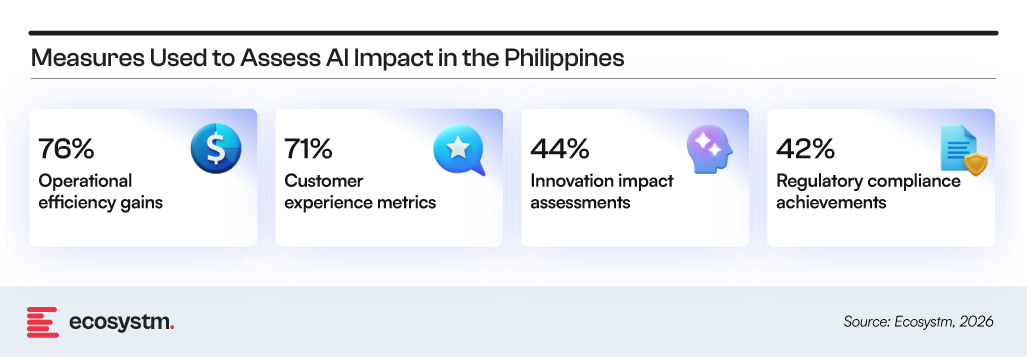
The question is whether AI can help the Philippines move beyond efficiency gains to higher-value work, improving productivity while expanding the services it can deliver.