
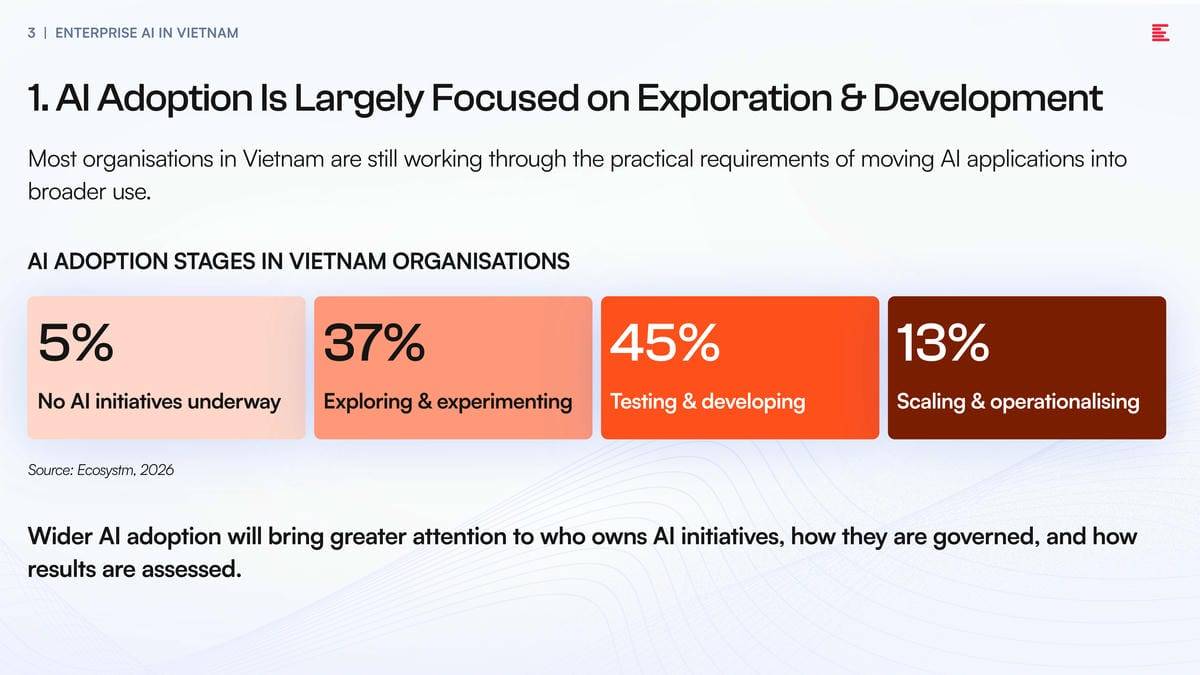













1. AI Adoption Is Largely Focused on Exploration & Development
Most organisations in Vietnam are still working through the practical requirements of moving AI applications into broader use.
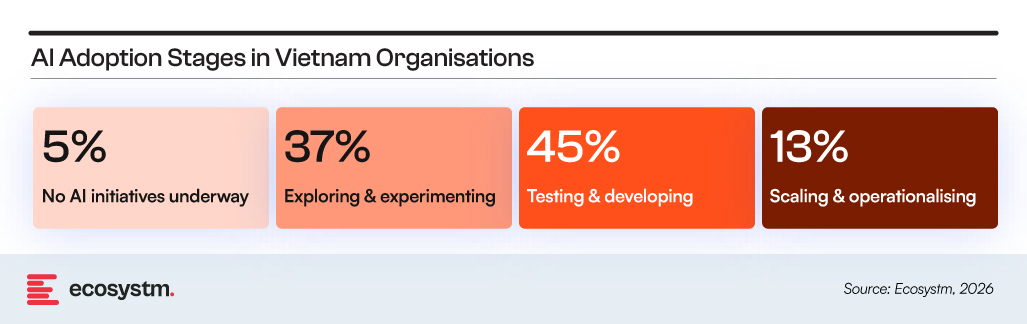
Wider AI adoption will bring greater attention to who owns AI initiatives, how they are governed, and how results are assessed.
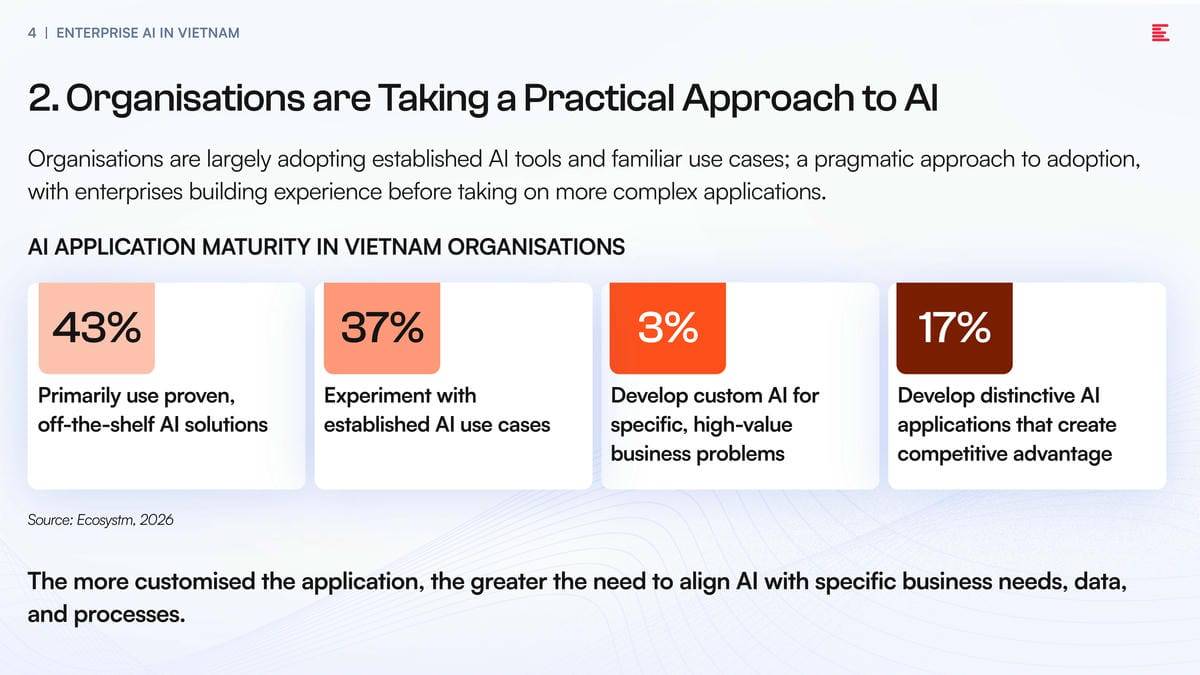
2. Organisations are Taking a Practical Approach to AI
Organisations are largely adopting established AI tools and familiar use cases. This points to a pragmatic approach to adoption, with enterprises building experience before taking on more complex applications.
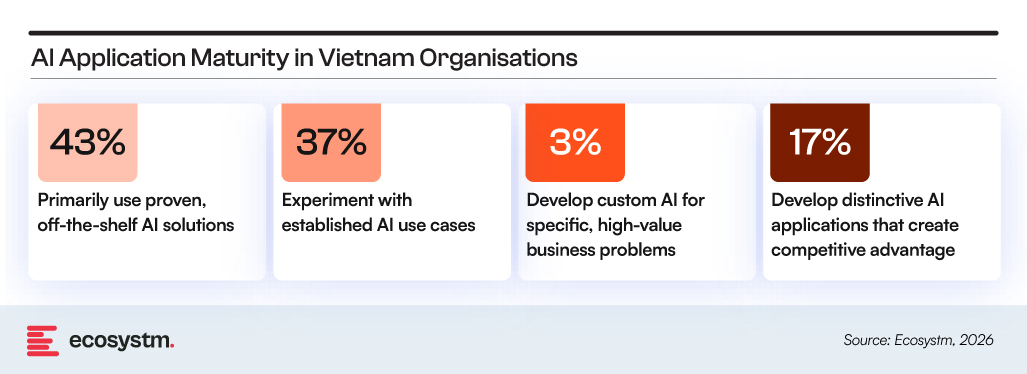
The more customised the application, the greater the need to align AI with specific business needs, data, and processes.
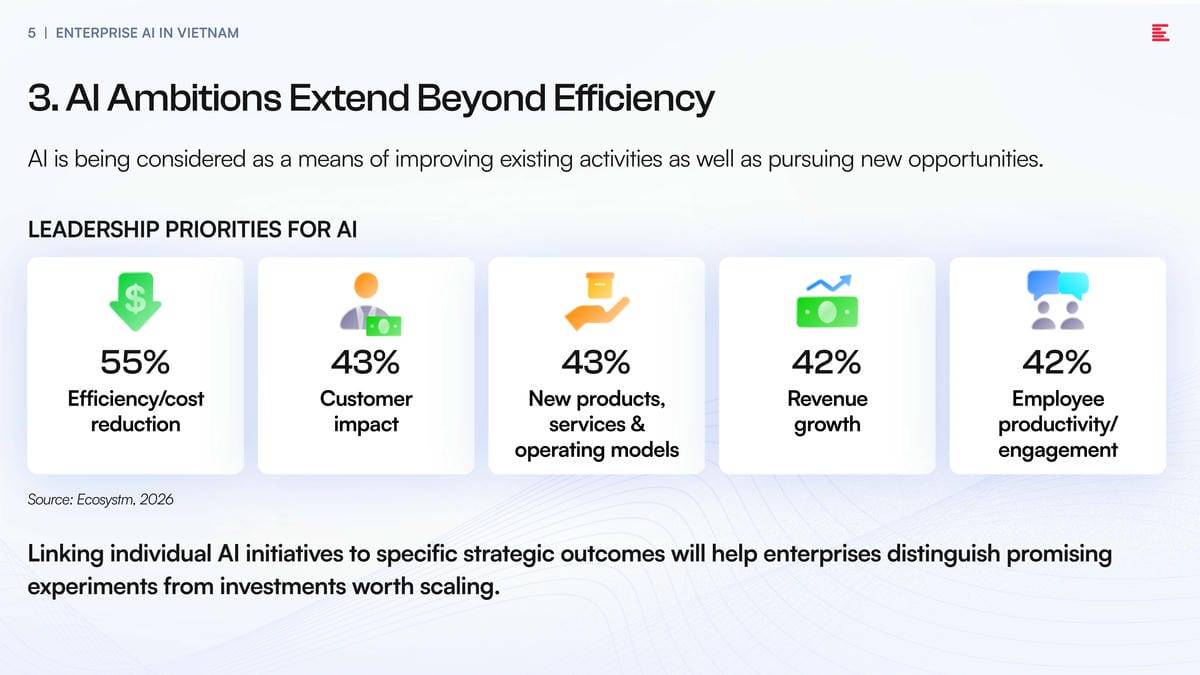
3. AI Ambitions Extend Beyond Efficiency
AI is being considered as a means of improving existing activities as well as pursuing new opportunities. This gives organisations different reasons to invest in AI, depending on the priorities of the business.
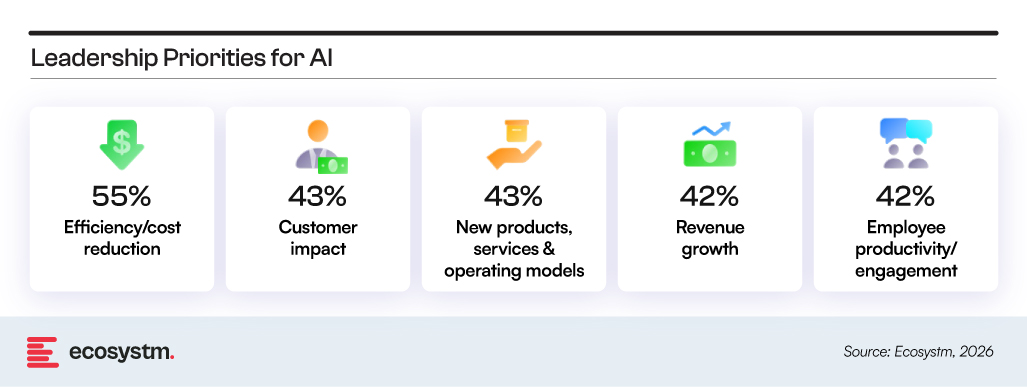
Linking individual AI initiatives to specific strategic outcomes will help enterprises distinguish promising experiments from investments worth scaling.
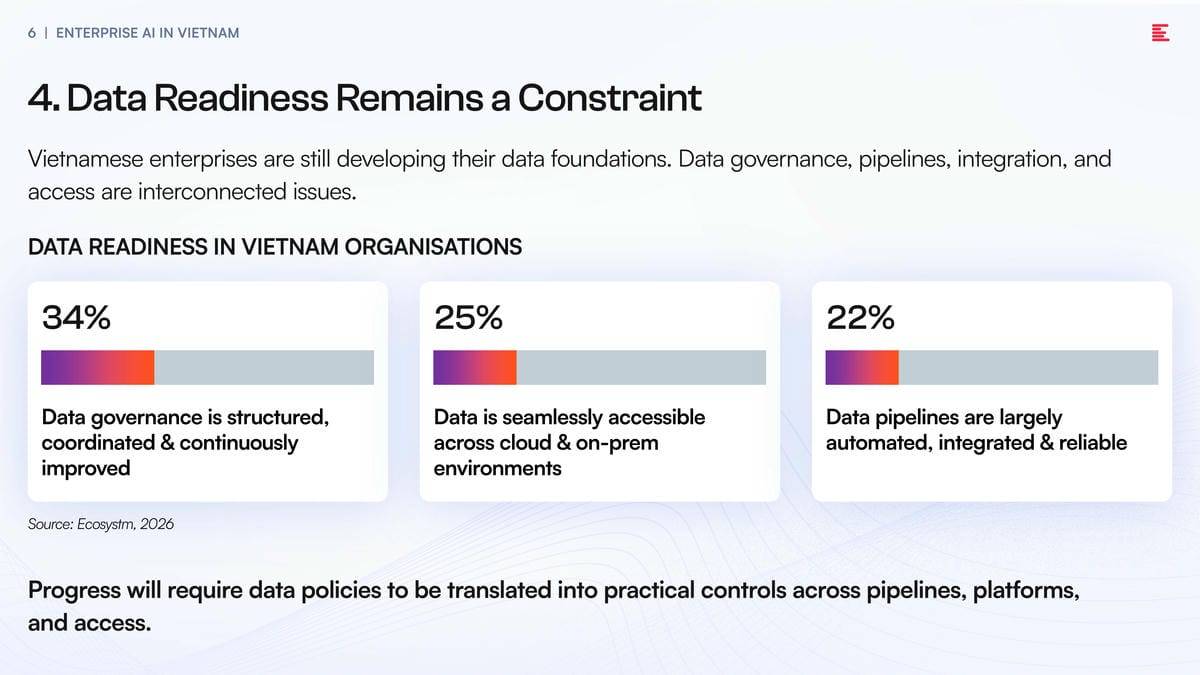
4. Data Readiness Remains a Constraint
Vietnamese enterprises are still developing their data foundations. Data governance, pipelines, integration, and access are interconnected issues.
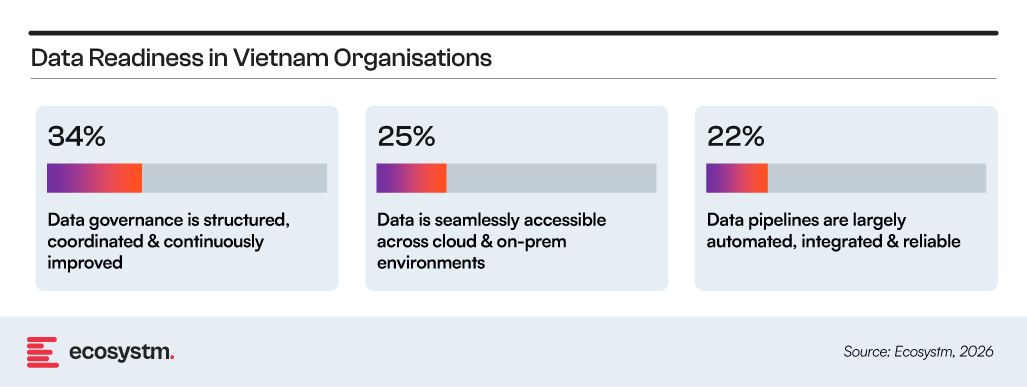
Progress will require data policies to be translated into practical controls across pipelines, platforms, and access.
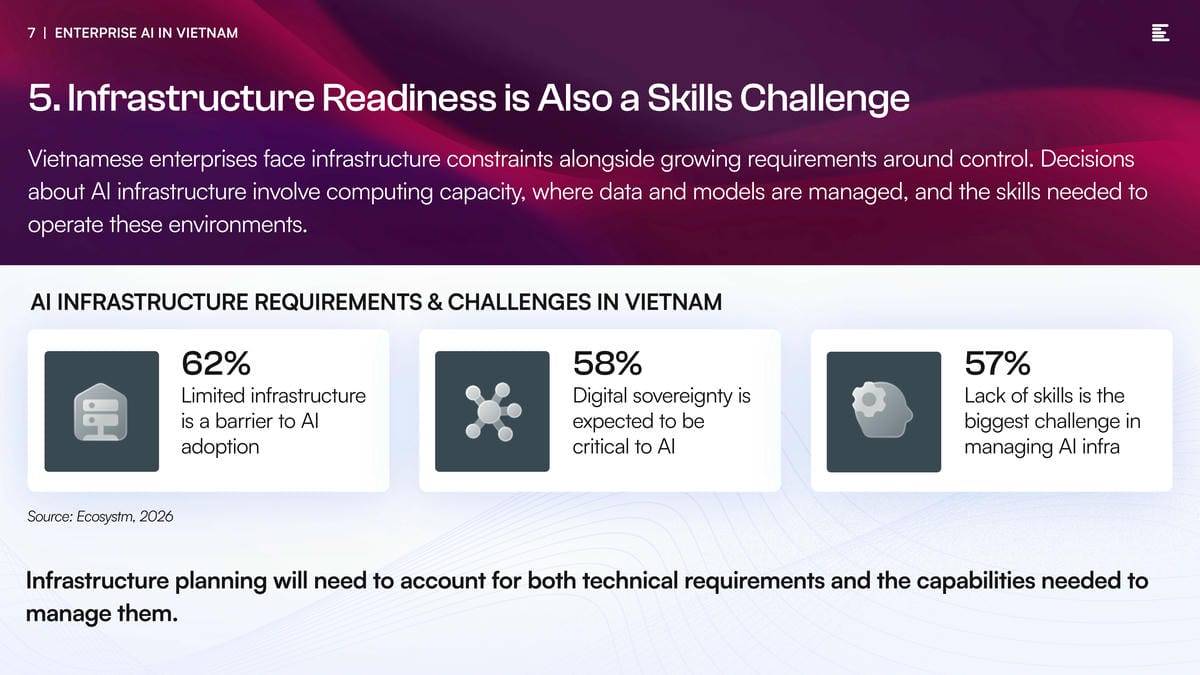
5. Infrastructure Readiness is Also a Skills Challenge
Vietnamese enterprises face infrastructure constraints alongside growing requirements around control. Decisions about AI infrastructure involve computing capacity, where data and models are managed, and the skills needed to operate these environments.
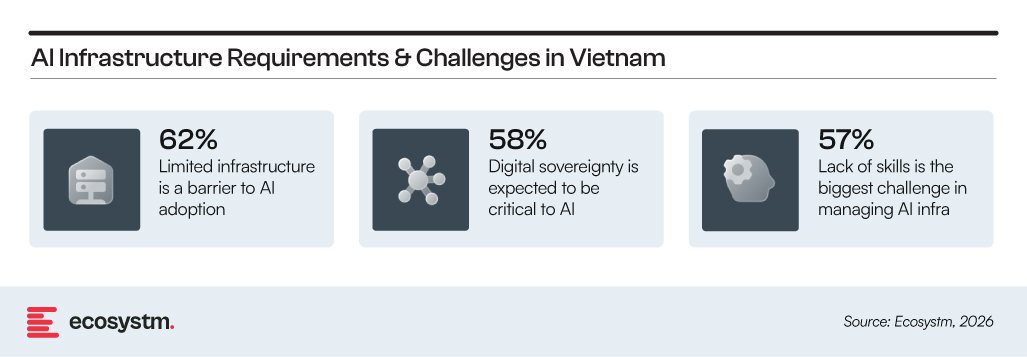
Infrastructure planning will need to account for both technical requirements and the capabilities needed to manage them.
6. AI Culture is Still Developing
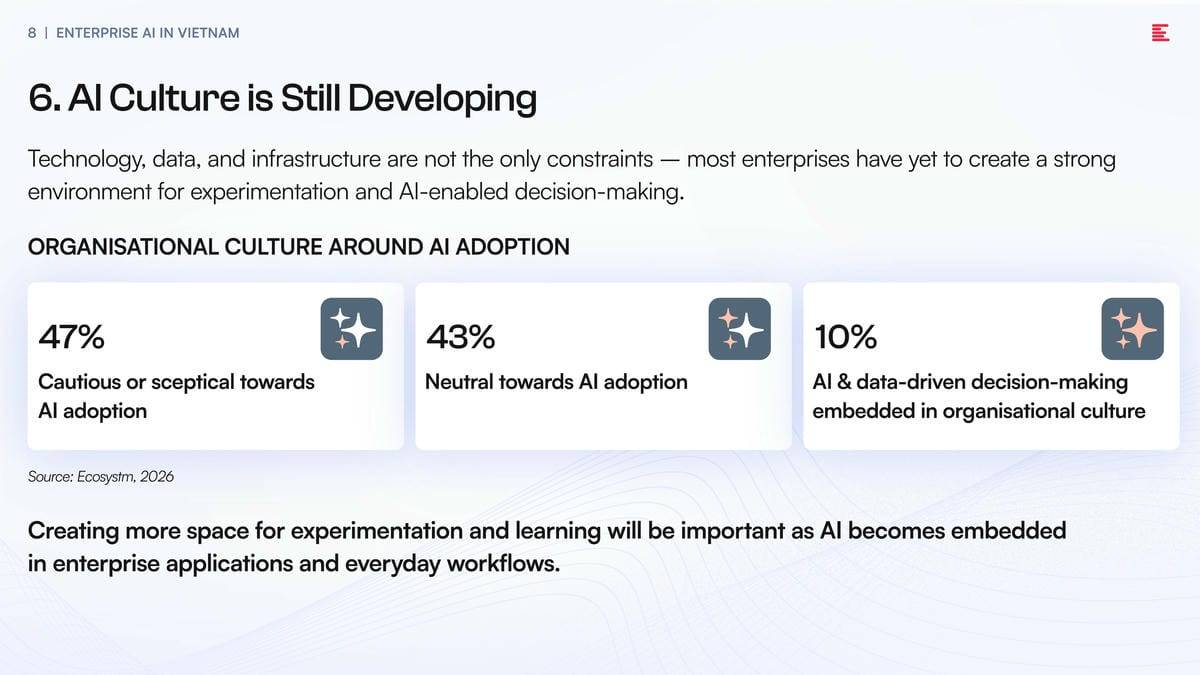
Technology, data, and infrastructure are not the only constraints – most enterprises have yet to create a strong environment for experimentation and AI-enabled decision-making.
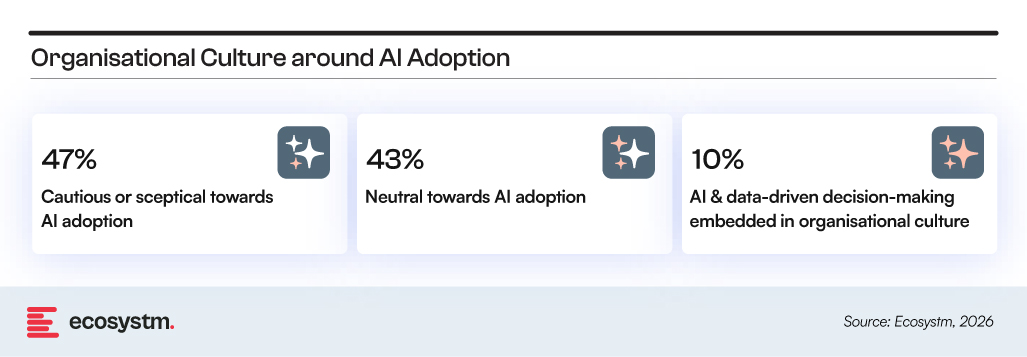
Creating more space for experimentation and learning will be important as AI becomes embedded in enterprise applications and everyday workflows.