










1. AI Strategy & Business Integration
Central oversight can establish priorities, allocate resources and set common guardrails, but it does not guarantee that AI is changing how the business operates.
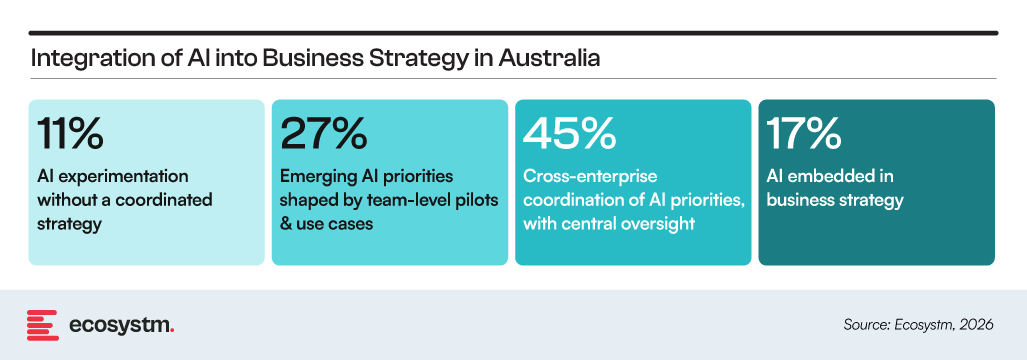 Leaders must define the business outcomes they expect from AI and account for the resources and organisational changes needed to achieve them.
2. AI Adoption & Deployment Maturity
AI initiatives move into production when they demonstrate business value and have clear ownership, manageable risks, and a viable path to integration and ongoing support.
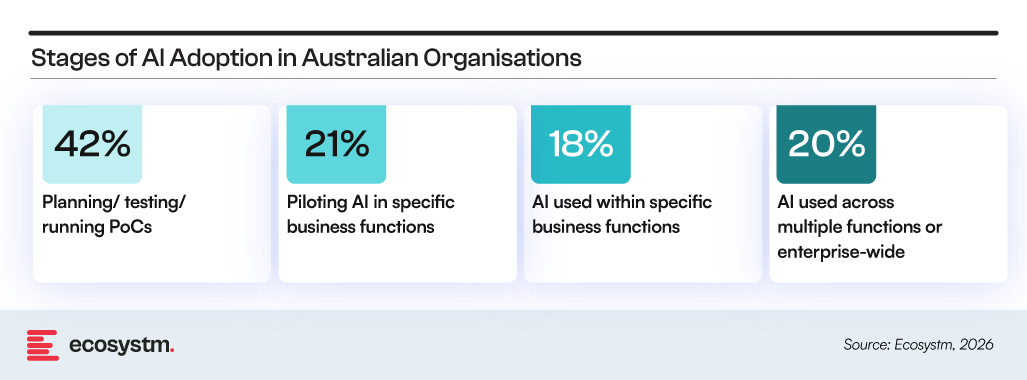 Moving beyond pilots requires more than evidence of business value: teams need the resources to integrate AI into existing workflows and the organisational support to change how work gets done.
3. Standardised AI Deployment Capabilities
Many Australian organisations are investing in standardised AI platforms, creating a foundation for more consistent deployment, integration, security and ongoing management.
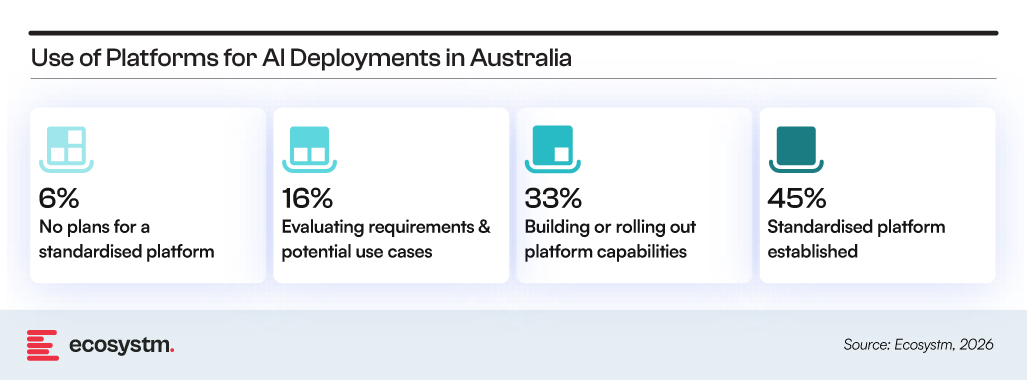 Reusable integration capabilities are a practical priority. These should address recurring needs across business units while preserving clear accountability for individual applications.
4. AI Lifecycle Management
Monitoring AI in production requires visibility into model behaviour, inputs and outputs, performance, and system dependencies – not just infrastructure health.
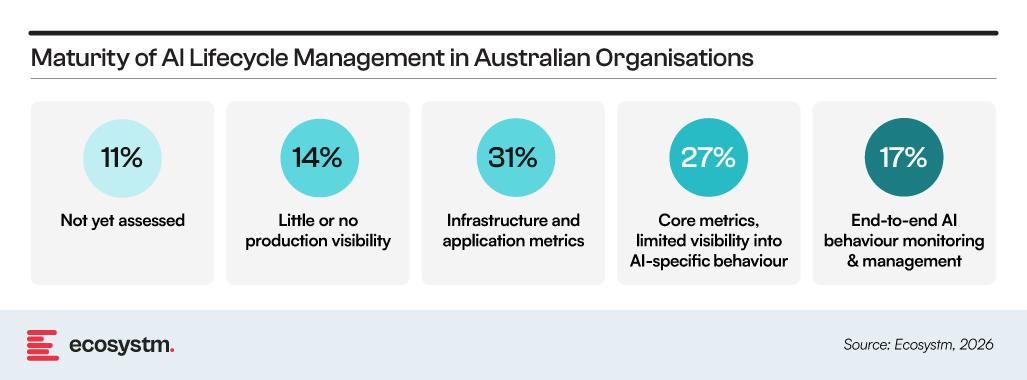 Many organisations have limited insight into how applications perform once deployed. Leaders need monitoring that covers the AI lifecycle, including output quality, drift, dependencies and emerging risks.
5. Responsible AI Governance
AI governance requires more than policies: organisations need clear accountability, risk controls and oversight that extend into production.
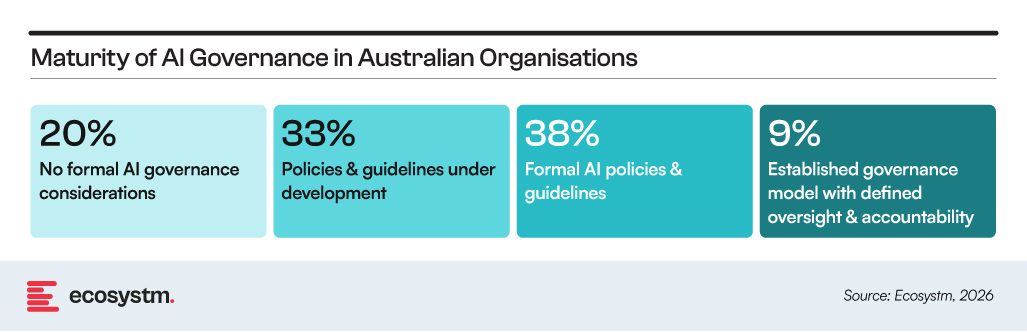
Organisations need to translate policies into risk-based approvals, accountable ownership, ongoing monitoring and incident response, including for third-party AI systems. Oversight should be proportionate to the potential consequences of AI failure, particularly where systems influence decisions about credit, employment or customer eligibility.
Barriers to AI Adoption
The barriers span technology, funding, skills and organisational change, explaining why progress in strategy does not always translate into effective deployment and ongoing management.
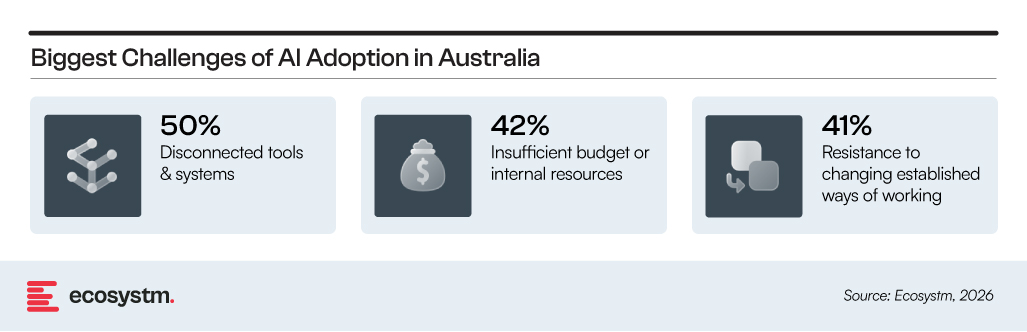
Investment in shared capabilities, skills and workflow redesign should target the bottlenecks that affect multiple initiatives, with budgets accounting for integration and ongoing support as well as initial development.