- Why are AI pilots not scaling in Thailand?
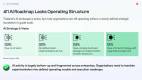
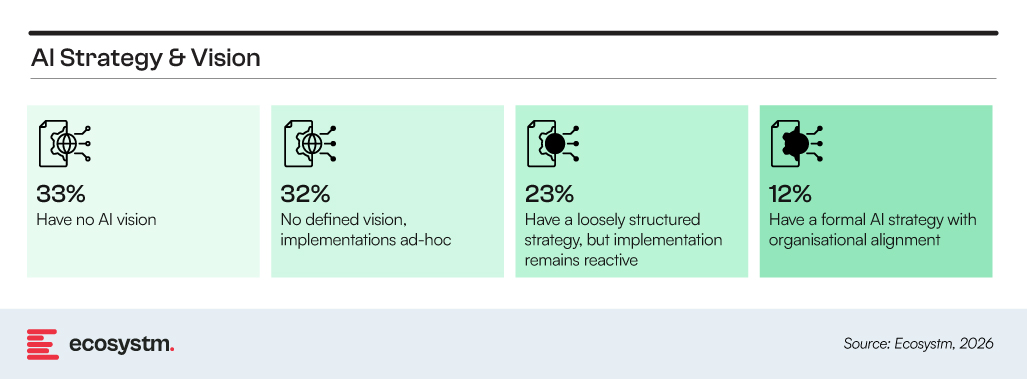
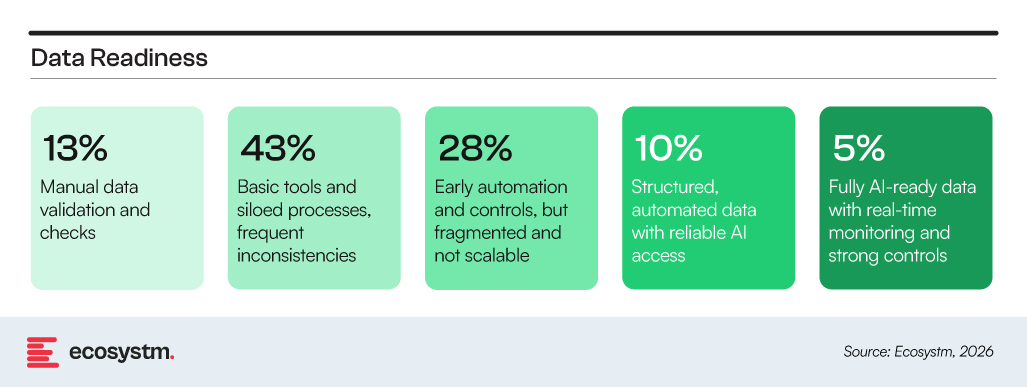
Because most pilots are still not connected to the systems they are meant to operate in. Infrastructure, data environments, and enterprise workflows are evolving, but not in sync. As a result, pilots tend to work in controlled environments but break when exposed to fragmented legacy systems, regulatory constraints, and real operational variability.
- Is Thailand ready forGenAIat scale?
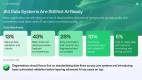
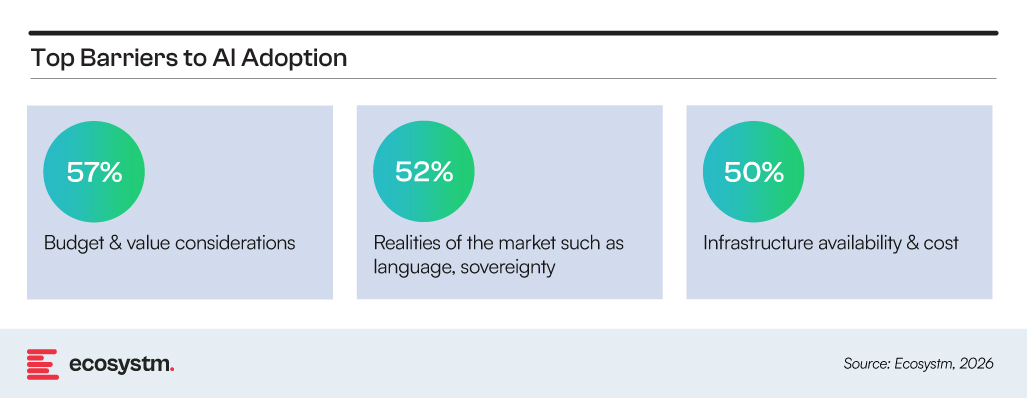
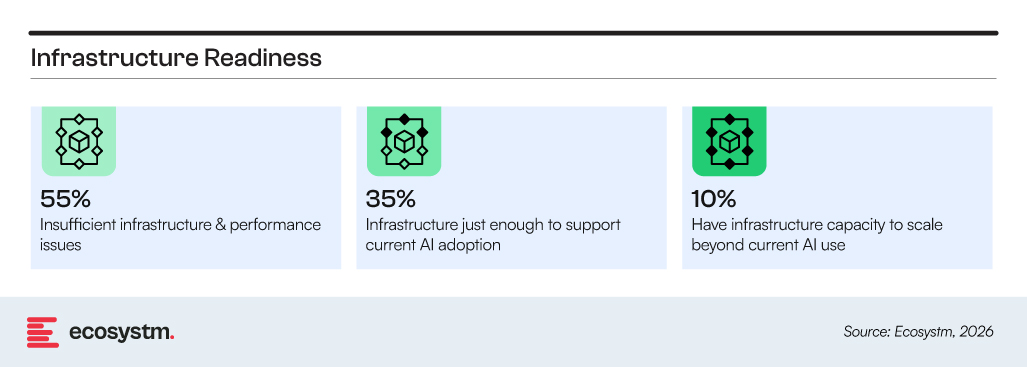
Thailand is not uniformly ready yet. Infrastructure investment is accelerating, including large-scale data centre approvals (USD 29B) and additional dedicated capacity (USD 3.1B), but enterprise readiness is uneven. Many organisations still operate with fragmented data, legacy applications, and limited integration across business functions, which slows down production-scale deployment.
- What isThaiLLM?
ThaiLLM is being positioned for regulated and language-sensitive use cases where domestic control matters. Built on NSTDA and ThaiSC infrastructure, it supports Thai-language processing and keeps data and inference within Thailand’s jurisdiction. Early applications are emerging in finance, healthcare, and public services where compliance and language fidelity are operational requirements, not optional features.
- 4. Do Thai enterprises needSovereignAI or is cloud enough?
Cloud remains the foundation, but sovereign AI is becoming relevant in sectors where data control, regulatory compliance, and inference location are critical. Government, BFSI, and healthcare organisations are increasingly evaluating AI not just on performance, but on where workloads run and how governance is enforced within national boundaries.
- What is driving data centre investment in Thailand?
The primary driver is the shift toward compute-heavy AI and cloud workloads. Thailand’s Board of Investment has approved around USD 29B in major projects, with a significant share in digital infrastructure, alongside an additional USD 3.1B in data centre expansion. This reflects a broader move to position Thailand as a regional node for AI and cloud infrastructure.
- What is ThailandFastPass?
FastPass is designed to reduce approval and regulatory delays for strategic investments such as data centres and infrastructure-heavy AI projects. Its relevance is in execution speed — as infrastructure demand rises, regulatory throughput becomes a binding constraint on how quickly AI capacity can actually be deployed.
- Where isAI being used in Thailand today?
AI is beginning to move into operational environments rather than just pilots. In agriculture, fertiliser optimisation is being deployed across 3,000 farmers. In public services, AI is being used in elderly care systems, sign language interpretation, and welfare coordination tools. In tourism, platforms like the “Amazing Thailand” app are integrating AI-driven personalisation through partnerships such as the Tourism Authority of Thailand and Mastercard.
- Whatis AIS 5G?
AIS’s 5G-Advanced rollout strengthens the connectivity layer required for AI workloads that depend on low latency and real-time responsiveness. It is particularly relevant for industrial and enterprise use cases where AI needs to operate closer to operational systems rather than in centralised cloud environments.
- Why arehyperscalers investing in Thailand?
Hyperscalers are expanding in Thailand due to rising demand for cloud and AI infrastructure and the country’s push to become a regional compute hub. Investments in cloud and AI infrastructure signal long-term confidence in Thailand’s ability to support large-scale, compute-intensive workloads.
- What is theAI skills gap in Thailand?
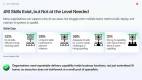
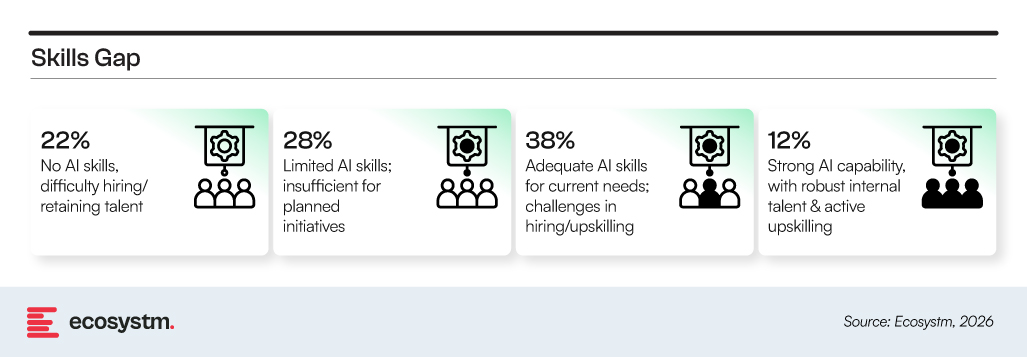
Estimates suggest a gap of around 80,000 AI-capable professionals across sectors. This is not limited to data scientists but includes a broader shortage of AI-fluent workers across business functions. As a result, workforce programmes are expanding beyond technical training into enterprise-wide AI fluency initiatives.
- What is MicrosoftTHAI Academy?
Microsoft’s THAI Academy, in partnership with Thailand’s Department of Skill Development, aims to train around 100,000 workers and job seekers in applied AI skills. The focus is on practical AI usage across roles, rather than deep technical specialisation alone, reflecting the broader shift toward AI fluency across the workforce.
- Why isthe workforce such a big constraint for AI in Thailand?
Thailand’s labour structure is changing due to ageing demographics and slower growth in the working-age population. This means AI adoption is not just about productivity improvement, but about whether organisations can redesign work fast enough to match new operating models and sustain economic competitiveness.
- What is blockingGenAI adoption in Thailand?
The main constraints are integration-related rather than model-related. Enterprises struggle with fragmented data systems, legacy infrastructure, and unclear operational ownership of AI. Even when models are available, embedding them into end-to-end workflows remains the hardest step.
- Whatare semiconductorsand photonics?
Because Thailand is trying to deepen its position in the AI value chain, not just consume infrastructure. Semiconductor and photonics collaborations between government, academia, and industry are aimed at strengthening talent pipelines, research capability, and long-term industrial competitiveness.