Australia’s AI policy has been relatively light touch compared with the pace of AI development. The country has relied on existing laws, voluntary guidance, and consultation to address the risks and opportunities associated with the technology.
2026 saw a change. The government is making more specific decisions about the conditions under which AI can be developed, deployed, and supported in Australia. This comes as investment in computing infrastructure is growing, organisations are moving AI into more operational settings, and government agencies are dealing with the practical risks of using more capable systems.
Here are five developments shaping Australia’s AI agenda.








1. Australia establishes new AI institutions and standards
The Office of AI was established within the Department of the Prime Minister and Cabinet in July 2026, with responsibility for coordinating AI policy and developing Australian AI standards. Its remit includes AI safety, copyright, and infrastructure.
The government has opened consultations on standards for large data centres and frontier AI training. The proposals cover energy and water use, location, workforce, security, research, and access to compute. National Cabinet has agreed to work towards nationally consistent requirements, with legislation planned for 2027.
The proposed frontier AI standards include incident-reporting requirements, setting expectations for how providers respond to serious incidents involving advanced AI systems.
Privacy rules are being updated. Draft legislation released in August addresses AI and other technologies that collect and process personal information. For organisations using personal data in AI systems, privacy requirements will need to be considered alongside how those systems are designed and used.
The National AI Centre has also launched AI.gov.au, a central platform that brings together government guidance, tools and resources. It gives organisations a practical starting point for adopting AI responsibly while detailed requirements are still taking shape.
Policy direction is clearer than it was a year ago as privacy, infrastructure and incident reporting are becoming areas of focus.
2. Australia expands AI computing capacity
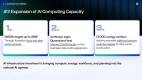
Australia is attracting investments in AI computing. NVIDIA is targeting up to 2GW of AI computing capacity by 2027 through local cloud and data centre partners, while Anthropic has signed its first Australian data centre agreement for a 2.16GW facility in Queensland.
For organisations planning AI infrastructure projects, the emerging standards will influence where facilities can be built, how they are designed, and the conditions attached to them.
The infrastructure pipeline brings practical constraints. Industry estimates suggest around 13,000 additional energy trades workers could be needed to support data centre construction. Access to skilled workers will be an important consideration as projects move ahead.
Power is another constraint. Large AI facilities require substantial electricity capacity, while data centre development competes for land, water, and network capacity. The availability of these resources will affect how quickly projects can be built and brought into operation, regardless of demand for AI compute.
3. Government develops a national approach to AI assurance
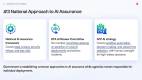
Commonwealth, state, and territory governments have agreed on a national framework for AI assurance, covering legal, privacy, security, ethical, and bias risks. A six-member DTA AI Review Committee will provide non-binding advice on sensitive or novel deployments and serious incidents, while agencies retain responsibility for their decisions.
The framework gives agencies a common basis for assessing AI systems, but responsibility remains with the agency deploying the technology. Agencies will need the expertise to understand how systems work, identify potential failures, and determine appropriate controls.
The Australian Federal Police illustrates how AI can be applied in government while retaining human oversight. Its AI strategy covers applications including workflow automation, decision-making, and cybercrime detection, with human involvement maintained for high-stakes public safety and law-enforcement decisions.
For organisations deploying AI, assurance will depend on more than having a framework in place. They will need people who can assess the technology, understand its limitations, and apply controls appropriate to the use case.
4. AI investment sits within a broader capability agenda
Government funding for AI is being combined with investment across related research and industrial fields. Australia is committing USD 6.2 million to international research collaborations covering AI, advanced manufacturing, quantum technology, and hydrogen, with an emphasis on commercialisation.
A further USD 37.7 million is being invested in the Critical Metals for Critical Industries Cooperative Research Centre, bringing together 62 organisations to improve domestic processing and reduce the environmental impact of refining. The work covers materials used in batteries, renewable energy, electronics, and defence.
State governments are funding research commercialisation as well. New South Wales has committed USD 104 million to a science and innovation fund that will co-invest with universities.
These programs are broader than AI, but they contribute to the research, industrial, and commercial capabilities needed to develop advanced technologies. Capability building is taking place across federal and state programs rather than through a single national AI program.
The focus now is on translating these investments into commercial applications, domestic production capability, and wider adoption.
5. Australia expands international AI cooperation
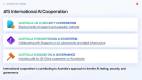
Australia is strengthening cooperation on AI security. The UK AI Security Institute and Australian AI Safety Institute are sharing information on frontier AI capabilities, collaborating on evaluation methods, and exchanging research, including work on AI-enabled cyberattacks and defensive measures.
Common evaluation methods can matter beyond the research community. If governments develop compatible approaches to testing frontier systems, developers operating across both markets may encounter similar expectations even where the regulatory frameworks remain separate.
Australia is also seeking greater participation in international discussions on AI governance, including calls for US-China cooperation on AI protocols. At the same time, the country is working with Singapore for collaboration on AI adoption, digital infrastructure, investment, and AI safety and assurance.
Work with external partners is also contributing to practical approaches for frontier AI testing and evaluation. As other Asia Pacific countries develop their own AI assurance frameworks, these methods could provide useful reference points.
Ecosystm Opinion
Australia’s AI agenda is becoming more practical. The policy work is moving beyond broad principles into decisions about infrastructure, assurance, research capability, and the conditions for deployment. Each area creates requirements that organisations will need to account for when investing in AI.
The more difficult part is coordination. Compute capacity, energy supply, skills, research, assurance, and enterprise adoption are closely connected, but they are being addressed through different programmes and levels of government. Progress in one area will not automatically resolve constraints in another.
For Asia Pacific, Australia offers a useful case study in how a mid-sized economy is building AI capability while responding to the infrastructure and assurance requirements that come with it. The experience will provide practical evidence of what works, where implementation becomes difficult, and which capabilities need to develop together.