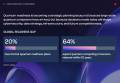
Quantum technology is becoming an important consideration in long-term technology planning, with implications for technology risk, national competitiveness, and digital sovereignty. A May 2026 OECD study found that only 20% of organisations worldwide have formal plans in place to build quantum readiness, despite 64% expecting quantum computing to become widespread in their industry within the next decade.
Countries are responding at different stages of maturity. In December 2025, the New Zealand Institute for Advanced Technology initiated a discovery phase for a proposed national quantum technologies research platform to assess New Zealand’s capabilities and commercial opportunities. Australia, by comparison, established a national quantum strategy in 2023 and has since broadened its focus from research to workforce development, ecosystem growth, commercialisation, and national security.
For enterprise technology leaders, quantum readiness is becoming a strategic planning issue rather than a research agenda. It has implications for cybersecurity, data strategy, infrastructure investment, technology lifecycles, and workforce capability. While large-scale quantum computing remains some years away, the decisions organisations make today will influence their ability to manage quantum-related risks and capture future opportunities.


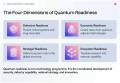



The Four Dimensions of Quantum Readiness
Quantum readiness extends beyond research capability. It requires coordinated investment in the people, infrastructure, data, governance, and industry capabilities needed to manage quantum-related risks while capturing emerging economic opportunities. Four dimensions define readiness.
Defensive readiness
Defensive readiness is the immediate priority because every other quantum opportunity depends on trusted digital infrastructure. It requires organisations to:
- Identify cryptographic exposure. Build an inventory of cryptographic assets and identify where quantum-vulnerable encryption is used across systems, applications, and third-party services.
- Prioritise long-lived data. Identify information that must remain secure for decades, recognising that “Harvest Now, Decrypt Later” attacks mean the quantum risk already exists for sensitive data.
- Plan for post-quantum cryptography (PQC). Treat migration as a multi-year enterprise transformation spanning architecture, applications, devices, and supply chains.
- Protect critical infrastructure. Prioritise sectors with the greatest exposure, including energy, utilities, telecommunications, emergency services, and other critical national infrastructure.
- Strengthen sovereign capability and digital trust. Ensure critical digital services remain resilient, trusted, and secure as quantum technologies mature.
Australia illustrates the shift from awareness to preparedness. Guidance from the Australian Signals Directorate (ASD) encourages organisations to treat quantum security as a current cyber risk, with cryptographic discovery and inventory forming the foundation of post-quantum preparedness.
Economic readiness
Economic readiness is about creating value from quantum-adjacent and quantum-inspired technologies before large-scale quantum computing becomes commercially viable. It requires organisations to:
- Identify near-term opportunities. Evaluate where quantum photonics, sensing, communications, and quantum-inspired computing can deliver practical value over the next five to ten years.
- Focus on nationally significant industries. Prioritise sectors where New Zealand has established strengths, including precision agriculture, food systems, environmental and climate intelligence, conservation, natural hazard monitoring, energy resilience, and trusted digital finance.
- Strengthen data foundations. High-quality, interoperable, and trusted data remains a prerequisite for quantum-enabled innovation.
- Build commercial pathways. Strengthen connections between research, industry, and investment to accelerate commercial adoption.
Many national strategies place economic readiness alongside defensive readiness, recognising that quantum-inspired technologies are expected to create commercial value well before fault-tolerant quantum computers become widely available.
Strategic readiness
Strategic readiness is about defining where a country can build internationally recognised capability rather than competing across the entire quantum landscape. It requires governments to:
- Define national priorities. Align quantum investment with long-term economic strengths and research capability.
- Develop sovereign capability. Invest in research, workforce, and infrastructure that reduce dependence on overseas capability in strategically important areas.
- Create long-term policy certainty. Provide clear direction for investment, research, commercialisation, and international collaboration.
- Build international relevance. Participate in global partnerships, standards development, and international research programmes.
Countries are pursuing different strategies. Singapore has focused on finance, cybersecurity, and research leadership; Australia has expanded its focus to commercialisation and national capability; the United Kingdom has adopted mission-led programmes; while Denmark has specialised in quantum sensing and research translation.
Ecosystem readiness
Ecosystem readiness determines whether research capability can be translated into national capability. It depends on sustained collaboration between government, industry, academia, investors, and international partners. It requires:
- Strong research capability. Sustain investment in universities, national laboratories, and research institutions.
- Commercialisation pathways. Translate research into products, services, and high-growth companies.
- Workforce development. Build multidisciplinary capability across quantum science, engineering, software, cybersecurity, and advanced manufacturing.
- Industry adoption. Support pilots, partnerships, and applied research that accelerate adoption.
- International collaboration. Participate in global research networks, standards development, and supply chains.
Tech New Zealand’s Quantum Forum reflects this ecosystem approach by bringing together stakeholders across research, industry, government, and commercialisation. International experience shows that coordinated ecosystems are increasingly becoming a source of competitive advantage, with countries such as Australia, Singapore, and Canada aligning investment across research, workforce development, commercialisation, and industry adoption.
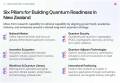
Six Pillars for Building Quantum Readiness in New Zealand
The four dimensions of quantum readiness provide a framework for understanding what readiness entails. Building that readiness will require coordinated investment across six strategic capability areas that align national priorities with research, industry, and enterprise adoption.
1. Define a National Quantum Mission
New Zealand needs a clear long-term vision for the role it intends to play in the global quantum landscape. MBIE’s discovery phase is an important starting point, but translating discovery into national capability will require clear priorities that align research, investment, workforce development, infrastructure, and commercialisation.
Rather than competing across the entire quantum landscape, New Zealand should concentrate on a small number of domains where it has established strengths and the potential to build internationally recognised capability. Potential priorities include:
- Environmental intelligence and resource management
- Natural hazard monitoring and resilience
- Food systems, agriculture, and cold-chain optimisation
- Advanced materials and manufacturing
- Trusted digital finance and secure communications
A clearly articulated national mission would provide a common direction for government, industry, academia, and investors while strengthening New Zealand’s international position.
2. Strengthen the Innovation Ecosystem
New Zealand has internationally recognised research capability in photonics, quantum optics, sensing, and quantum-inspired computing. The next challenge is translating that capability into commercial and societal outcomes.
This will require stronger connections between universities, Crown Research Institutes, industry, investors, government, and international partners. Commercialisation pathways, pilot programmes, testbeds, funding mechanisms, and industry partnerships will all be needed to accelerate the transition from research to adoption. A national Quantum Centre of Excellence could provide a focal point for coordinating these activities.
3. Build Workforce Capability and Quantum Literacy
Talent is emerging as one of the primary constraints on quantum readiness. New Zealand will require not only quantum scientists and engineers, but also leaders, policymakers, cybersecurity specialists, and technology professionals who understand the implications of quantum technologies for business and government.
Alongside specialist capability, organisations will need a broader community of “quantum translators” able to bridge research, engineering, regulation, policy, and commercial decision-making. Building quantum literacy across both the public and private sectors will strengthen future investment, governance, and technology decisions.
4. Accelerate Quantum Security Preparedness
Quantum security represents New Zealand’s most immediate quantum challenge. Long-lived information, including health records, government data, and financial information, is already exposed to future “Harvest Now, Decrypt Later” risks.
Preparing for this transition will require a national approach to post-quantum cryptography supported by cryptographic discovery, enterprise-wide cryptographic inventories, migration planning, and practical guidance for organisations. Treating PQC as a long-term transformation programme rather than a technology refresh will improve the resilience and trustworthiness of New Zealand’s digital infrastructure.
5. Invest in Quantum-Adjacent Technologies
While fault-tolerant quantum computing remains some years away, quantum-inspired optimisation, sensing, photonics, advanced simulation, and quantum communications are already delivering practical value.
These technologies provide an opportunity to build capability while strengthening industries where New Zealand has recognised competitive advantages, including agriculture, food systems, environmental intelligence, renewable energy, natural hazard resilience, advanced manufacturing, and trusted digital finance. Early adoption will also strengthen the skills, data, and operational capabilities needed for future quantum applications.
6. Position New Zealand Internationally
Quantum readiness is increasingly being shaped through international collaboration, investment, standards, and supply chains. New Zealand will need to define how it wishes to participate within this global ecosystem.
Continued investment in research, workforce development, commercialisation, and international partnerships will be essential, but so too will a clear international value proposition. Rather than seeking to compete in quantum hardware, New Zealand has the opportunity to establish leadership in quantum applications that build on its existing economic strengths. A clear international position will help attract investment, deepen partnerships, and translate domestic capability into long-term economic and strategic value.
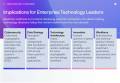
Implications for Enterprise Technology Leaders
For enterprise technology leaders, quantum readiness is not about deploying quantum computers. It is about making technology decisions today that remain resilient over the next decade.
- Cybersecurity. Begin understanding cryptographic exposure, long-lived data risks, and the transition to post-quantum cryptography.
- Data strategy. Strengthen trusted, interoperable data foundations that will support both AI and future quantum-enabled applications.
- Technology architecture. Evaluate infrastructure, applications, and vendor roadmaps to ensure they can accommodate future cryptographic and technology transitions.
- Innovation portfolio. Explore practical opportunities in quantum-inspired optimisation, sensing, simulation, and photonics that can deliver value before universal quantum computing becomes commercially viable.
- Workforce capability. Build executive and technical literacy so organisations can make informed investment, security, procurement, and governance decisions as the technology evolves.
Conclusion
New Zealand is at an earlier stage of quantum readiness than several of its peer nations, but it also has the opportunity to define a distinctive national position. The focus should not be on competing across the entire quantum landscape, but on building capability in areas that align with the country’s economic strengths and long-term strategic priorities.
For government, this requires a coordinated approach to national strategy, research, commercialisation, workforce development, and quantum security. For enterprise technology leaders, the priorities are more immediate: understanding cryptographic exposure, strengthening data foundations, evaluating quantum-adjacent technologies, and building the organisational capabilities needed to respond as the technology evolves.
Quantum readiness is ultimately less about preparing for a single technology breakthrough than about strengthening the capabilities that will underpin New Zealand’s competitiveness, resilience, and digital trust over the coming decade.