






New Zealand has strong sustainability credentials, but the next phase will be defined by whether technology adoption can keep pace with intent.
With 80-85% of electricity already renewable, early adoption of mandatory climate-related disclosures, and Māori concepts such as kaitiakitanga shaping environmental stewardship, the foundations are established. The policy directions have been largely set, but now the focus needs to be on translating those into systems, infrastructure, and operating models that consistently show progress and deliver set outcomes.


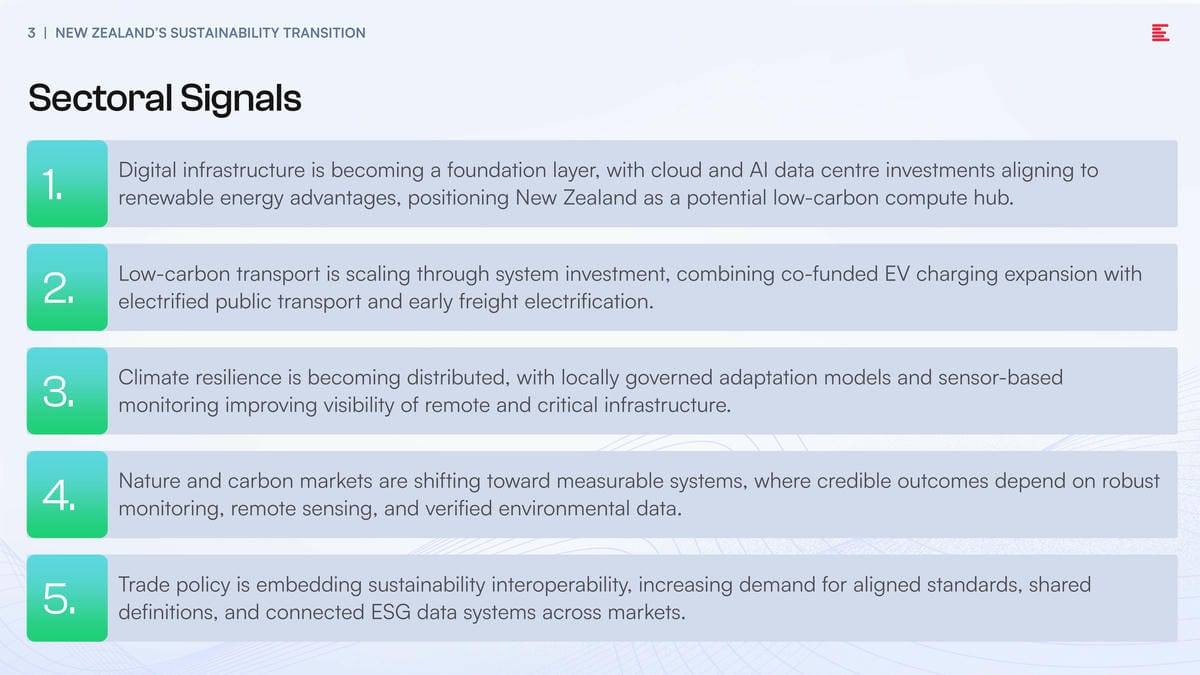
Sectoral Signals: How Sustainability Is Being Operationalised
Sectoral activity in New Zealand shows sustainability shifting from standalone initiatives to integrated systems across infrastructure, operations, and markets.
Digital infrastructure is becoming the foundation layer. Major cloud and infrastructure providers are aligning operations with New Zealand’s renewable energy base. AI-driven data centre investment is also positioning the country as a potential low-carbon compute hub, where energy mix, cooling efficiency, and grid design are now embedded in digital strategy, not just sustainability reporting. This creates a foundational layer where digital growth and decarbonisation are increasingly interdependent.
Low-carbon transport is scaling through system investment. Transport electrification is moving into infrastructure-led deployment. Co-funded EV charging expansion is addressing adoption constraints by combining public and private investment models. At the same time, electric buses are being introduced into urban networks, and logistics operators are beginning to electrify core freight operations, including temperature-controlled delivery.
Climate resilience is becoming distributed and locally embedded. Adaptation is shifting toward distributed models anchored in communities and frontline infrastructure. Funding for marae-based climate resilience reflects this shift toward locally governed adaptation. Simultaneously, IoT and satellite-connected sensor networks are enabling continuous monitoring of remote environmental and conservation infrastructure, improving visibility in areas that were previously difficult to track in real time.
Nature and carbon markets are moving toward measurable systems. New frameworks for nature credits and biodiversity markets are creating mechanisms to channel private capital into ecosystem restoration at scale. However, their viability depends on measurement integrity, including remote sensing, monitoring systems, and verified environmental data to ensure credibility and comparability of outcomes. This makes measurement infrastructure a prerequisite, not an afterthought.
Trade policy is embedding sustainability interoperability. Emerging green trade agreements are signalling a shift toward harmonised sustainability standards across markets. This increases demand for interoperable ESG systems, consistent reporting frameworks, and shared data definitions across jurisdictions. Sustainability is therefore becoming a trade and market access requirement, not only a domestic compliance issue.
Agriculture remains the most structurally complex transition challenge. Agriculture continues to represent the most difficult decarbonisation pathway due to its biological, behavioural, and economic complexity. Methane-reduction technologies including boluses, feed additives, genetics, and vaccines are advancing, but large-scale adoption depends on incentive structures, measurement capability, and alignment between productivity outcomes and emissions reduction.
Executing Sustainability Plans Within Organisations
While sectoral activity shows clear momentum in operationalising sustainability, organisational sustainability progress follows a different pattern, shaped more by governance priorities, data maturity, and execution capability. Ecosystm research shows organisations are broadly aligned on intent but still building the capability to deliver it at scale.
1. Sustainability momentum is shaped by external pressure
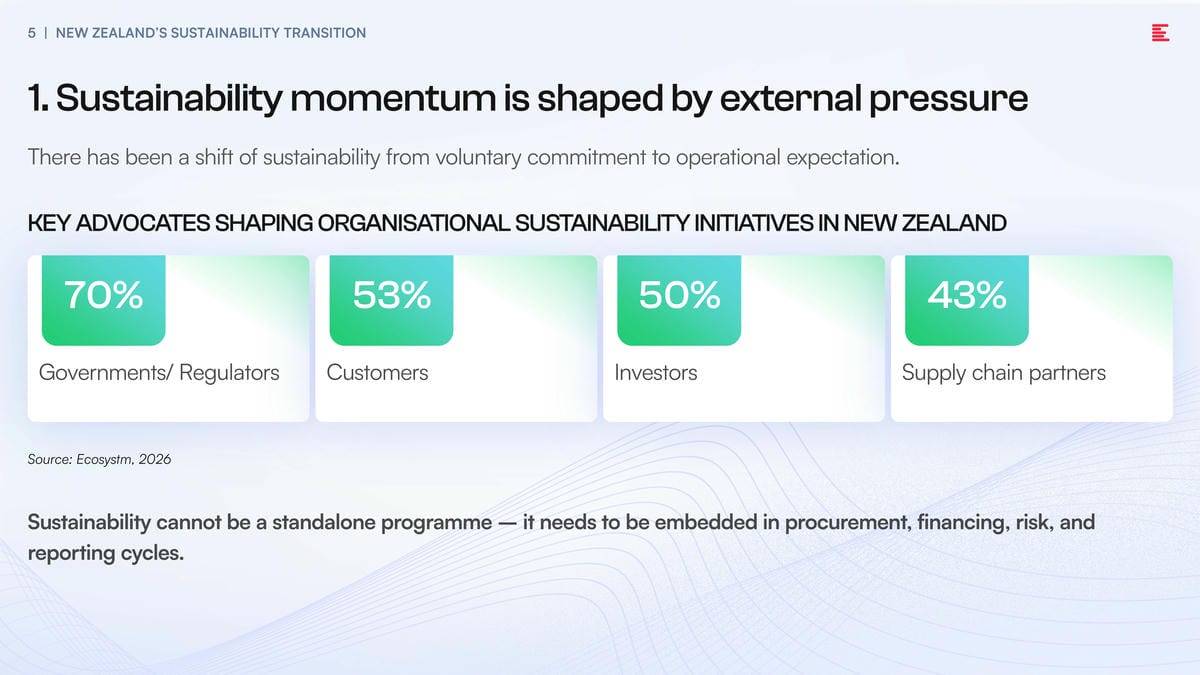
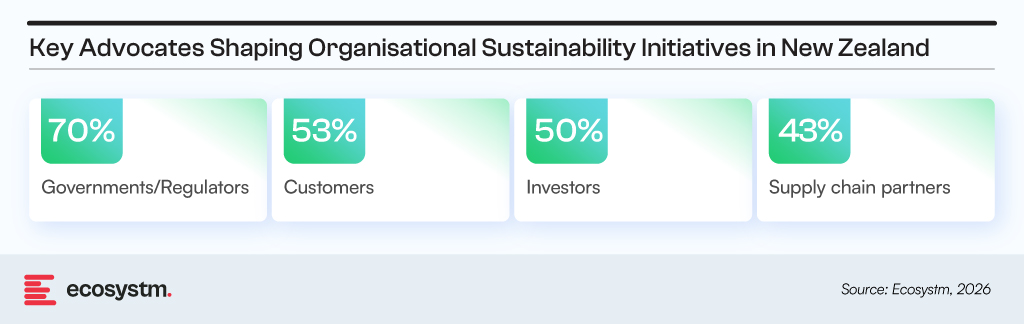
The strongest sustainability advocates for organisations are external stakeholders. Governments and regulators rank highest, followed by customers and investors.
There has been a shift in sustainability from voluntary commitment to operational expectation. Regulatory requirements, investor scrutiny, supply chain conditions, and growing demand from environmentally and socially conscious consumers are increasingly shaping how sustainability priorities are defined, measured, and enforced.
For many organisations, this means that sustainability cannot be a standalone programme – it needs to be embedded in procurement, financing, risk, and reporting cycles. The centre of gravity is moving from “why Sustainability” to “how Sustainability is tracked”, particularly as disclosure regimes mature and expectations around traceability increase.
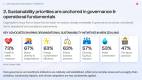
2. Sustainability priorities are anchored in governance & operational fundamentals
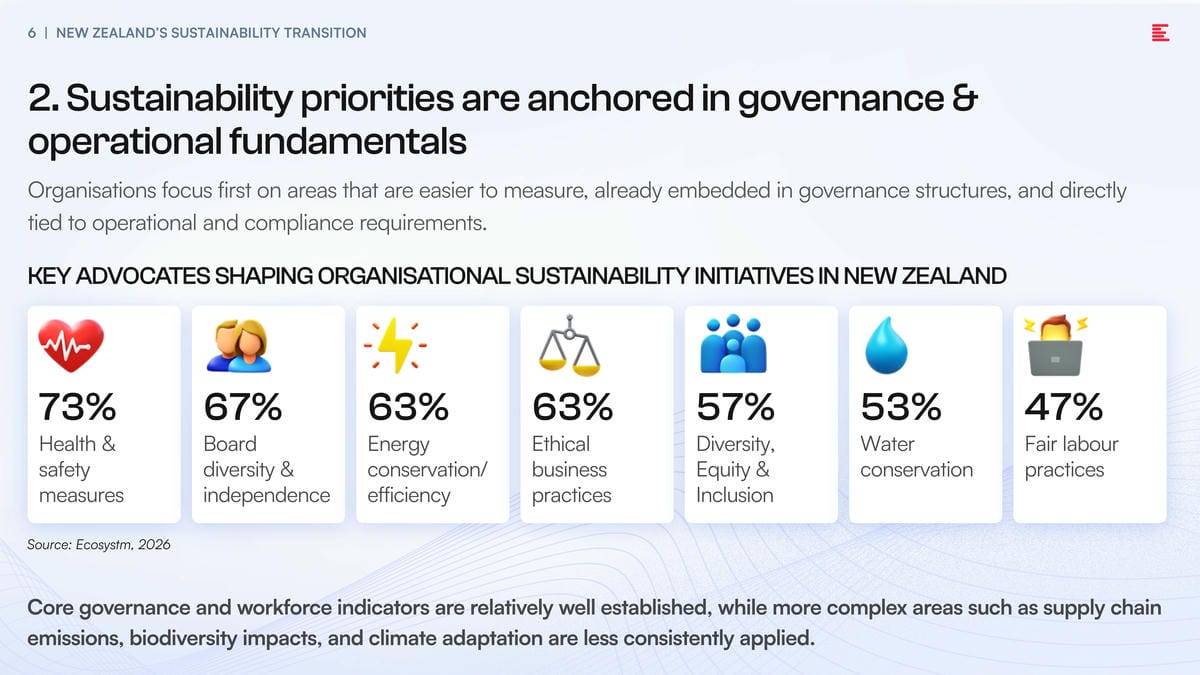
Most organisations continue to focus on foundational ESG priorities such as health and safety, board governance, energy efficiency, ethical business practices, and diversity and workforce-related initiatives.
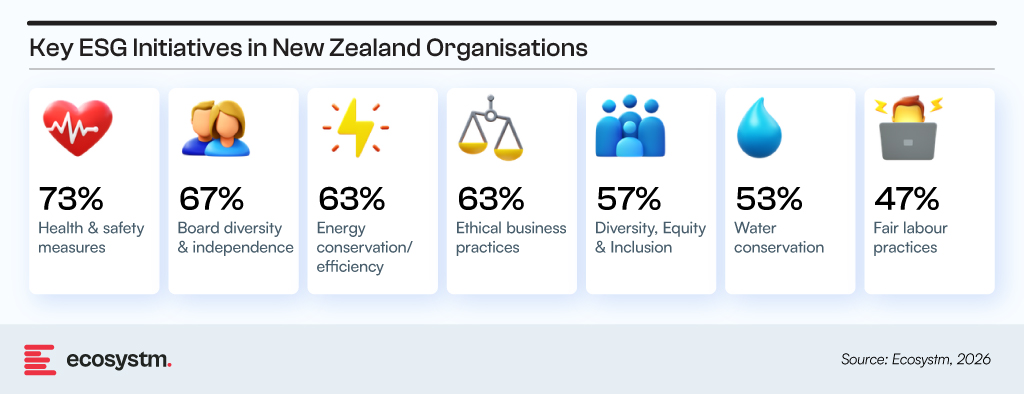
Prioritisation is driven by practicality rather than intent. Organisations tend to focus first on areas that are easier to measure, already embedded in governance structures, and directly tied to operational performance and compliance requirements.
This results in a tiered sustainability landscape. Core governance and workforce indicators are relatively well established, while more complex areas such as supply chain emissions, biodiversity impacts, and climate adaptation are less consistently operationalised.
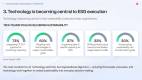
3. Technology is becoming central to ESG execution
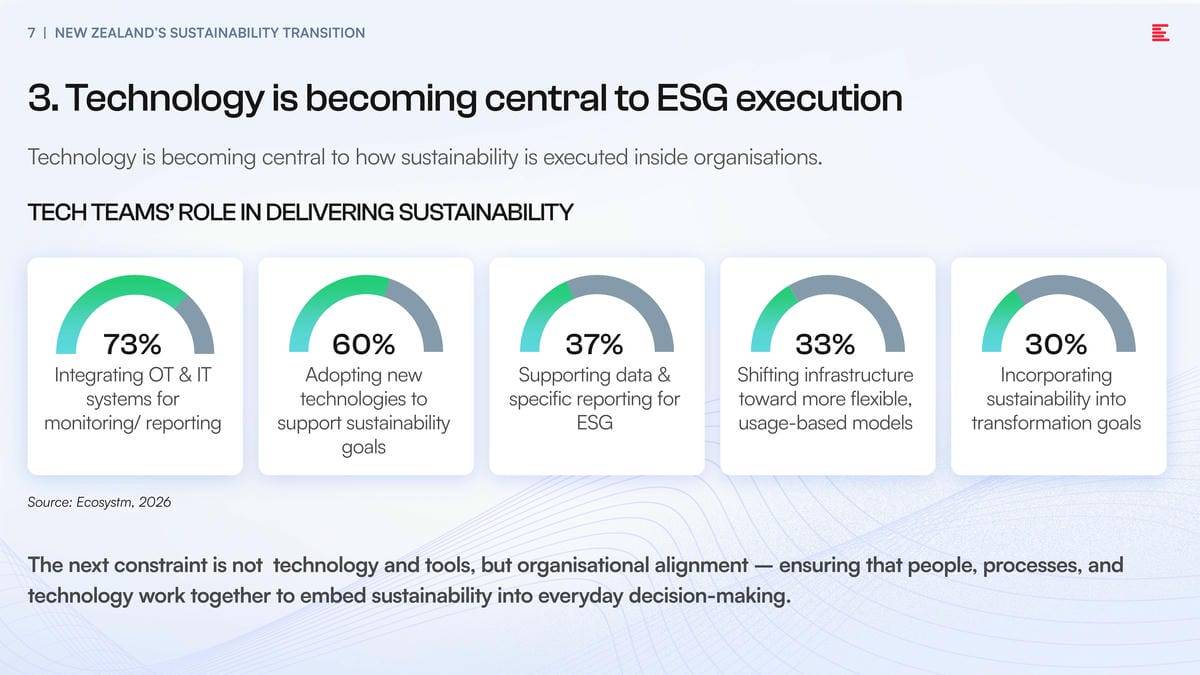
Technology is becoming central to how sustainability is executed inside organisations. As operational systems are increasingly connected with digital platforms, visibility across performance, reporting, and risk is improving, and organisations are moving away from periodic reporting cycles toward more continuous, data-driven insight. In many cases, this shift is being absorbed into broader digital transformation programmes rather than treated as a standalone sustainability initiative.
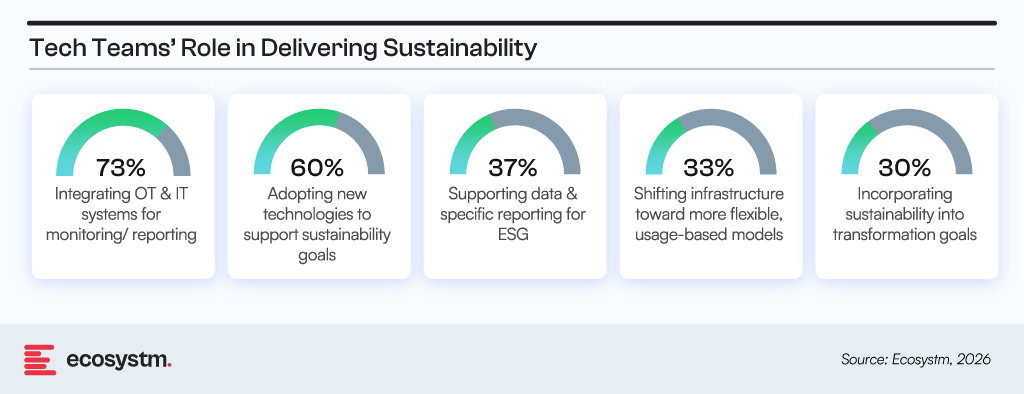
Sustainability is also beginning to influence infrastructure design choices, including how systems are modernised and how operating models are evolving.
As this continues to mature, the next constraint will not be technology and tools, but organisational alignment – ensuring that people, processes, and technology work together to embed sustainability into everyday decision-making rather than treating it as a compliance layer.
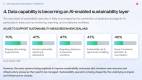
4. Data capability is becoming an AI-enabled sustainability layer
Data remains the foundation for sustainability, but AI is changing how it is being used. Organisations are starting to apply AI to connect fragmented information across operational, financial, and supplier systems, and to surface relationships that are difficult to identify through conventional analytics.
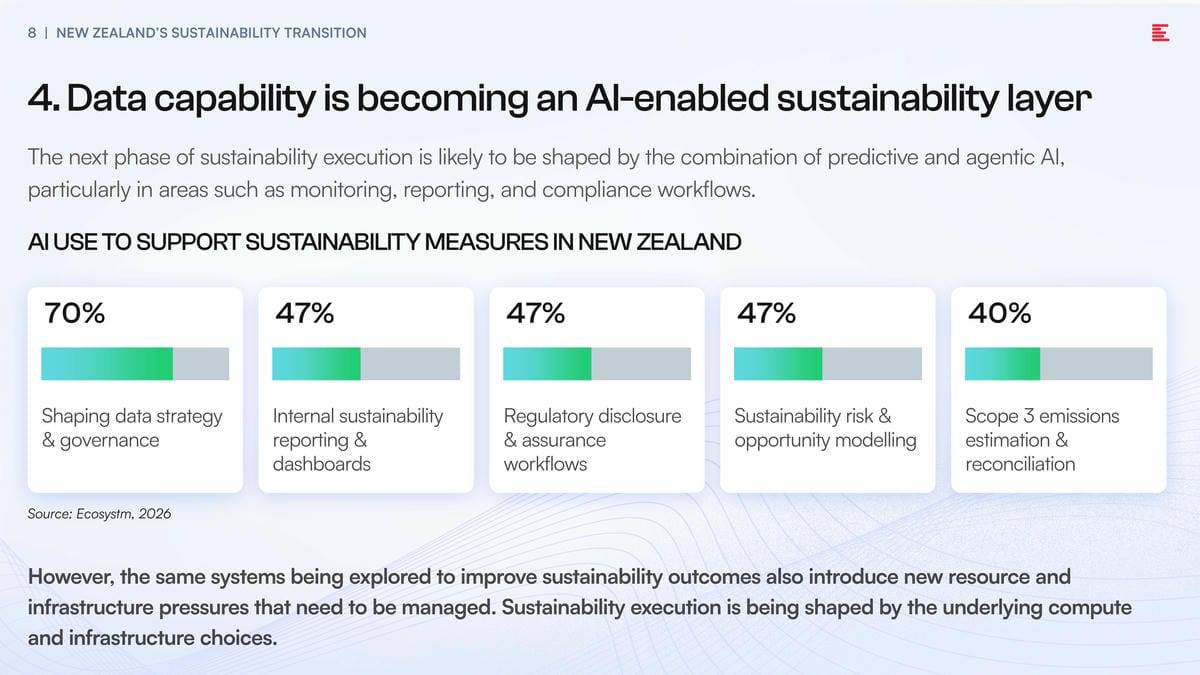
AI is being applied to sustainability workflows such as internal reporting, regulatory disclosure, Scope 3 estimation, risk modelling, and identifying operational efficiency opportunities.
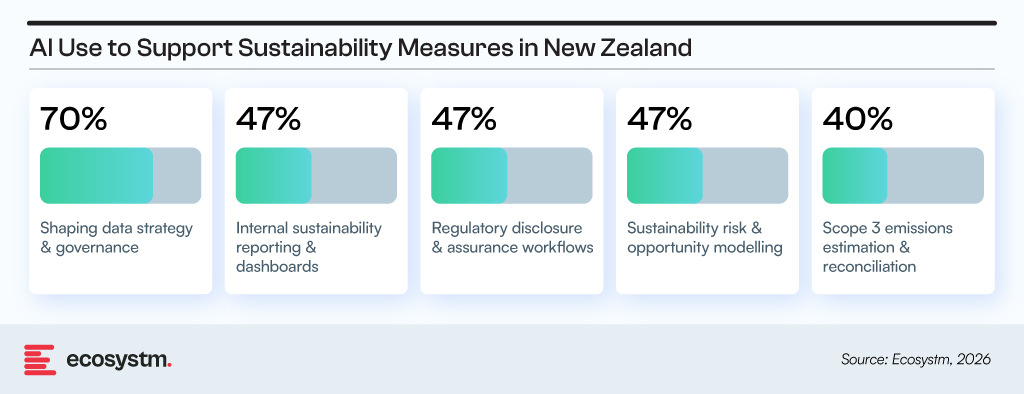
The next phase of sustainability execution is likely to be shaped by the combination of predictive and agentic AI, particularly in areas such as monitoring, reporting, and compliance workflows that remain highly manual and resource-intensive today. This has the potential to shift sustainability work from retrospective reporting toward more continuous, automated interpretation and response.
At the same time, this introduces a constraint that is becoming harder to ignore: the sustainability and cost footprint of AI itself. As organisations scale AI-driven use cases, compute demand, GPU availability, and energy consumption become material considerations particularly where workloads are not hosted on optimised or certified low-carbon infrastructure.
This creates a practical tension in adoption. The same systems being explored to improve sustainability outcomes also introduce new resource and infrastructure pressures that need to be managed. Sustainability execution is therefore being shaped not just by data and AI capability, but by the underlying compute and infrastructure choices that make those capabilities viable at scale.
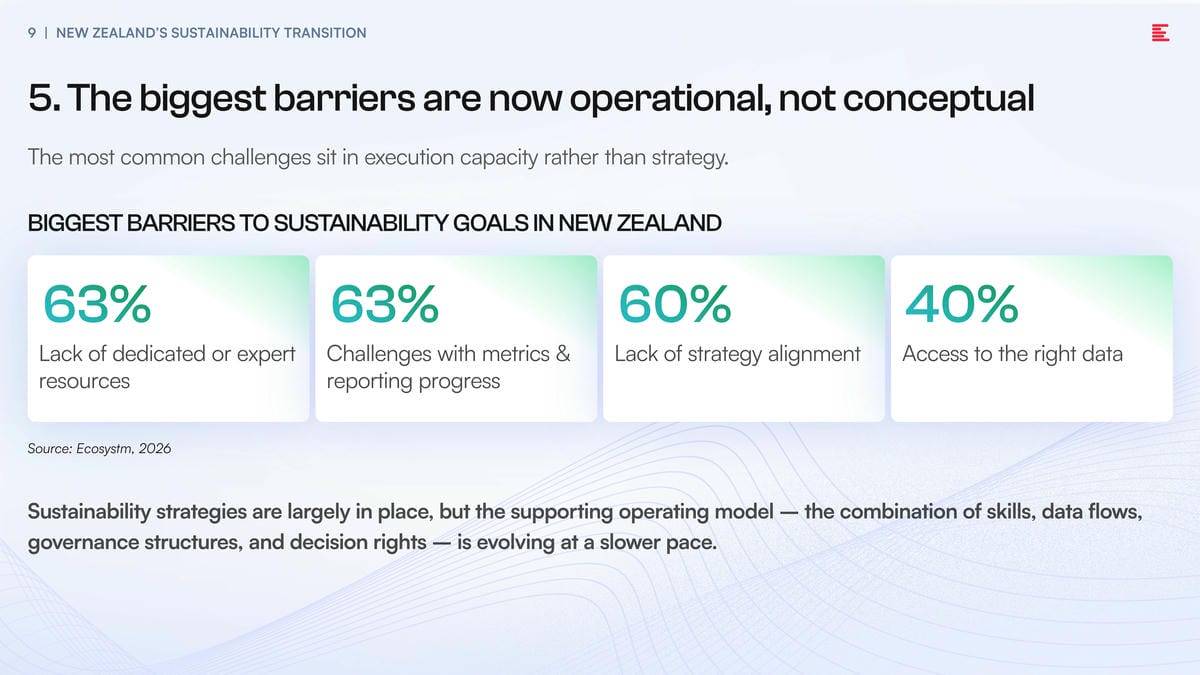
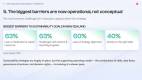
5. The biggest barriers are now operational, not conceptual
While organisations in New Zealand generally show strong intent and a willingness to act – supported by an established policy environment and a culture that is broadly aligned to sustainability outcomes – execution is often hindered by how work is structured and enabled on the ground. Technology investments are being aligned to sustainability goals, but in many cases, the people and processes required to act on that information are not yet fully empowered or resourced.
The most common challenges sit in execution capacity rather than strategy. Organisations continue to face gaps in specialised expertise, challenges in translating metrics into consistent reporting, and issues in aligning sustainability priorities with day-to-day operational decision-making.
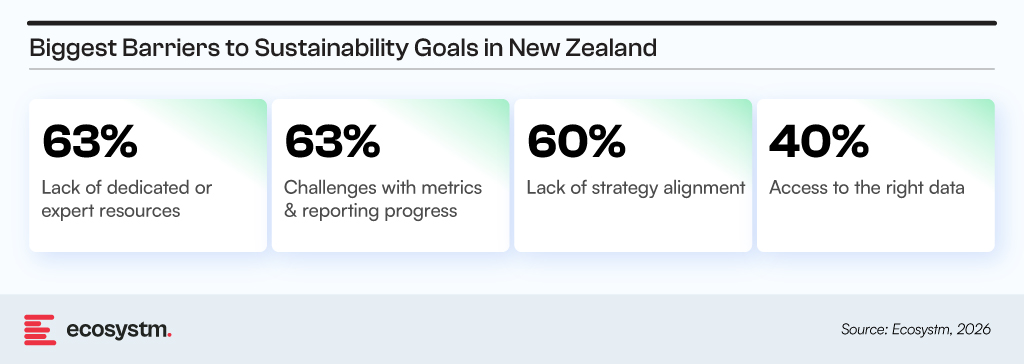
This is a transition gap rather than a commitment gap. Sustainability strategies are largely in place, but the supporting operating model – the combination of skills, data flows, governance structures, and decision rights – is evolving at a slower pace.
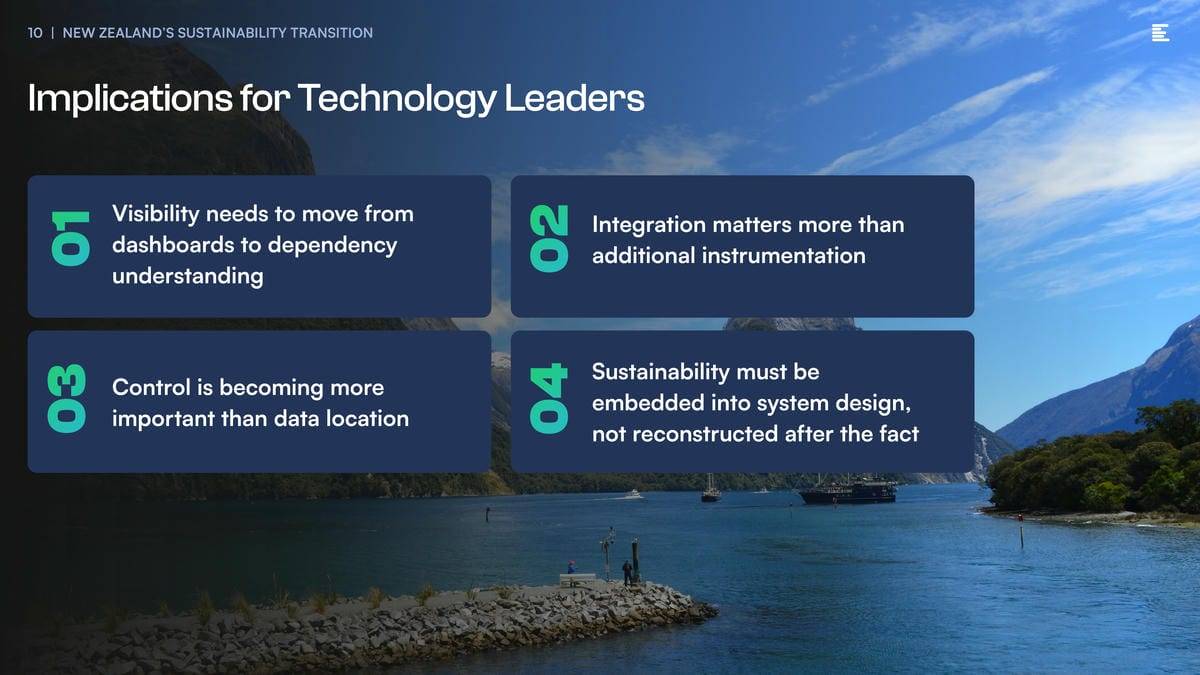
Implications for Technology Leaders
For enterprise technology leaders, sustainability is a systems and operating model challenge, not just a reporting and compliance issue.
Visibility needs to shift from dashboards to dependency understanding. Most organisations can observe individual systems, but fewer understand how applications, data flows, vendors, and operational processes interact. The gap is not in monitoring but in understanding where disruption or failure will cascade across connected environments.
Integration matters more than additional instrumentation. Sustainability-related data already exists across OT environments, IT systems, cloud platforms, and external partners. The issue is data fragmentation and the lack of consistent structures to make that data usable without repeated manual reconciliation.
Control is becoming more critical than data location. Knowing where data sits is increasingly insufficient. Organisations need clarity on who can access it, how it is governed across dependencies, and whether critical operations can continue under regulatory, geopolitical, or vendor disruption.
Sustainability needs to be embedded into system design, not layered onto reporting. Emissions, energy, and resource signals are still often reconstructed after the fact. The shift is toward embedding these metrics directly into operational systems so they are produced as part of execution rather than calculated separately.
New Zealand’s sustainability foundations are strong, but the next phase will be defined by organisations that can translate intent into connected systems, clear operational ownership, and repeatable performance under real-world conditions.

Why is sustainability reporting so hard for organisations in New Zealand?
Because most organisations are still dealing with fragmented data across OT systems, IT platforms, suppliers, and finance functions. Even where intent is strong, the lack of consistent definitions and connected systems makes reporting labour-intensive and often reactive rather than continuous.
Can AI help with ESG or sustainability reporting?
Yes, but mainly by reducing the manual effort involved in connecting and interpreting data. AI is being used for reporting, Scope 3 estimation, compliance workflows, and risk modelling. However, it doesn’t fix the underlying issue of disconnected systems — it works better when the data foundation is already reasonably structured.
What is the role of AI in sustainability in the future?
The direction is toward predictive and agentic AI that can automate parts of monitoring, reporting, and analysis. Instead of sustainability being periodic and backward-looking, AI enables more continuous visibility and faster identification of risks and inefficiencies.
What are the biggest barriers to sustainability in organisations today?
The main constraints are operational rather than strategic – lack of specialised resources, difficulty translating metrics into consistent reporting, and gaps in aligning sustainability goals with day-to-day operations. Most organisations are not lacking intent, but execution capacity.
Why do sustainability initiatives stall even when companies are committed?
Because sustainability is still often treated as an overlay rather than something embedded into systems and workflows. Without integration into operational decision-making, reporting cycles, and technology infrastructure, progress tends to slow after initial planning.
Is AI making sustainability easier or more complex?
Both. AI helps connect fragmented data and improve insight generation, but it also introduces new complexity around compute requirements, cost, and energy consumption. In some cases, the sustainability footprint of AI itself becomes part of the trade-off.
What do organisations need before scaling AI for sustainability use cases?
They need more connected data environments, clearer ownership of sustainability metrics, and better integration between operational and reporting systems. Without that, AI tends to sit on top of fragmentation rather than resolving it.
What is the next phase of sustainability for organisations in New Zealand?
It is shifting from intent and compliance to execution, specifically building the systems, data flows, and operating models that allow sustainability to be measured and acted on in real time, not reconstructed after the fact.